


.svg)
BEAUTY TREATMENTS
CO2 Laser Recovery: My Honest 2-Month Experience
My honest CO2 laser recovery timeline, from the painful treatment and first week of peeling to persistent redness and what my chest actually looked like two months later.
My CO2 Laser Experience: An Honest 2-Month Recovery Timeline
I paid for an exosome facial and CO2 laser treatment and somehow ended up processing childhood memories on the treatment table. Not exactly the spa day I had planned.
Have you ever gone in for something purely cosmetic—a little glow-up, some self-care, and had it unexpectedly unlock something emotional instead? That's exactly what happened to me. I thought I was getting microneedling with exosomes on my face and neck, followed by CO2 laser on my chest to address fine lines and pigmentation. I wasn't prepared for how physically intense the experience would be or the emotional reaction it would trigger.
Within minutes, I was lying there with tears streaming down my face. Some of that was absolutely the physical discomfort, but the sensations around my neck also brought back memories from childhood that I hadn't expected to be thinking about on an aesthetic treatment table in Tulum.
Then came the recovery.
If you're researching CO2 laser recovery, this is the part I really want you to see because mine took considerably longer than I expected. I documented my skin from the bloody first night through peeling, itching, persistent redness, and the marks that were still visible two months later.
This is my complete experience—the procedure, the unexpected emotional reaction, what my CO2 laser recovery timeline actually looked like, and whether I think the results were ultimately worth the downtime.
Where I Had My CO2 Laser Treatment in Tulum
I had the treatments at Cell Skin in Tulum, Mexico, a wellness and aesthetic clinic I've visited before. They offer a range of treatments that cross over between aesthetics and the increasingly popular longevity and regenerative-wellness space, including skincare treatments, red light therapy, IV therapy, and other services.
After spending about six months living in Tulum, I'd become fully immersed in that world. I'd tried peptides, IV drips, facials, red light therapy, and plenty of other treatments in the name of curiosity, health, and the ongoing experiment of figuring out what actually makes me feel good.
With my return to Canada approaching, and knowing many of these treatments would cost significantly more there, I decided to fit in one more big treatment day.
The plan was microneedling with exosomes on my face and neck, something I'd never tried before, followed by CO2 laser on my chest to target fine lines and pigmentation. I'd previously had CO2 laser performed on cosmetic-surgery scars, but I'd never treated an area this large.
I was about to learn that there's a significant difference.
Why I Decided to Try CO2 Laser on My Chest
My main concerns were the fine lines and pigmentation on my chest. This is an area that's had years of sun exposure, and I was curious whether CO2 laser could improve the overall appearance and texture. I'd seen some impressive CO2 laser before-and-after photos of faces online, but far fewer examples showing what happens when the treatment is performed on the chest. That should probably have been my first clue that I'd have fewer firsthand experiences to compare mine with afterward.
CO2 laser resurfacing works by creating controlled injury in the skin, which triggers a wound-healing response. Depending on the laser, settings, treatment depth, and individual patient, it's used to address concerns such as wrinkles, texture, scars, and pigmentation.
It is also not a casual facial. That distinction became very clear very quickly.
Prefer to watch? In this video, I take you through my entire CO2 laser experience in Tulum, from the unexpectedly emotional treatment itself to the peeling, itching, redness, and what my chest actually looked like two months later.
Microneedling With Exosomes: When My Treatment Became Emotional
We started with the microneedling. My skin was cleansed, numbing cream was applied, and we waited about 30 minutes for it to take effect. Mag, the head esthetician who had treated me before, began around my neck before moving across my face and forehead.
Some areas were uncomfortable, but when she reached the area underneath my eyes, something unexpected happened. I started crying. The physical sensation was intense in that particularly sensitive area, but my reaction felt bigger than simply, This hurts. I was surprised, overwhelmed, trying to hold myself together, and at the same time feeling like I wanted to stop fighting the reaction and just let myself cry.
Thankfully, by the time she reached the under eye area, most of my face and neck had already been completed. I had a chance to breathe, compose myself, and prepare for the part I'd actually been worried about.
The CO2 laser.
What CO2 Laser Actually Felt Like
I'd experienced CO2 laser previously on small cosmetic-surgery scars, but those areas had been treated after lidocaine injections. This time, I had topical numbing cream only. For me, that was a completely different experience. As the laser moved across my neck and chest, I found the sensation extremely painful. I tried concentrating on my breathing and mentally distancing myself from what was happening, but when the treatment reached a particular area around my neck and collarbone, my emotional reaction intensified.
I was born with torticollis and eventually had corrective surgery as a teenager. My neck had been a source of insecurity for me when I was younger, including experiences with a neck brace and being teased.
As the laser moved across that area, those memories suddenly came rushing back. I want to be careful with how I describe this because you'll often hear phrases such as “the body stores trauma.” That's a useful metaphor for some people's experiences, but I can't tell you that the laser medically released trauma from my tissue.
What I can tell you is what happened to me. A painful physical sensation in an area of my body that had a complicated history triggered a very strong emotional response and brought back memories I hadn't expected to revisit.
I cried. I struggled to stay present. I had to concentrate on my breathing to get through the procedure. It was one of the strangest intersections I've experienced between an aesthetic treatment and my emotional history.
What My Skin Looked Like Immediately After CO2 Laser
After nearly an hour, it was finally over. My chest was bright red, raw, and bloody. There was no immediate glamorous glow-up waiting for me in the mirror. This looked like an injury because, in a controlled sense, that's exactly what laser resurfacing creates in the skin.
The clinic applied a soothing product and gave me aftercare instructions that included avoiding sun, pools, cenotes, excessive heat, and other exposures that could interfere with healing. I also had a red light session before leaving.
The microneedled areas of my face felt relatively good afterward—slightly tender but manageable. My chest was a whole other story. I picked up the recommended aftercare supplies from a local pharmacy, went home, and prepared to spend the rest of the day recovering. Then I started documenting everything.
My CO2 Laser Recovery Timeline
If you've searched for CO2 laser recovery before and after photos, you've probably seen plenty of dramatic transformations for the face area. What I wanted while I was recovering was something slightly different.
I wanted to know: Is this redness normal? When will the peeling stop? How long will I look like this? Why am I still red weeks later? So here's what actually happened to me.
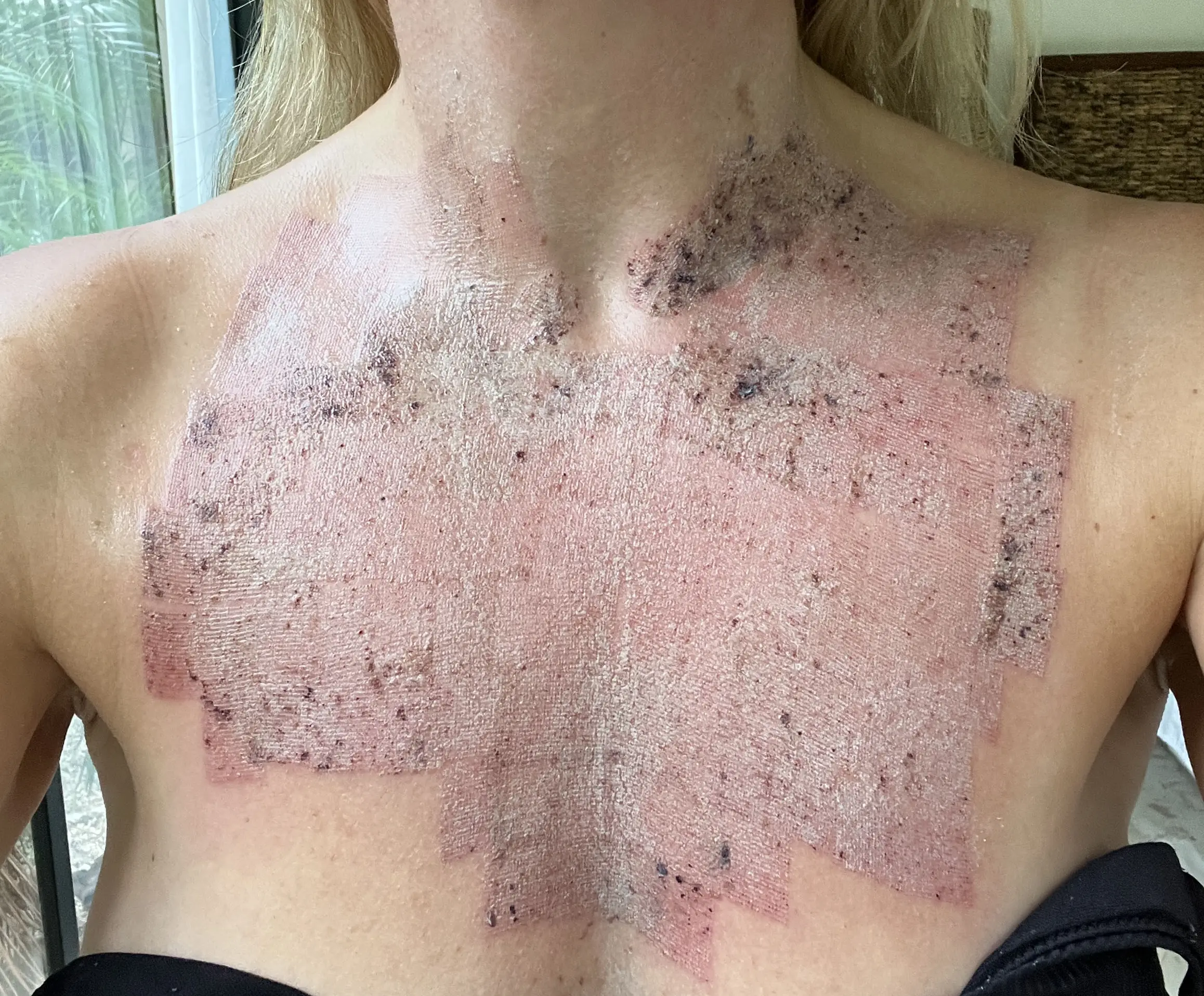
Days 1–3: Red, Bloody and Crusting
The evening after my CO2 laser treatment, the area was still bloody enough that it left marks on my pillowcase and sheets overnight. By day two, my chest remained extremely red. On day three, it looked rough enough that I would probably have been concerned if I hadn't known I'd just undergone an aggressive skin treatment.
Interestingly, I wasn't experiencing significant pain by that point. Instead, the skin had started developing crusting as it moved into the next stage of healing. I kept the area moisturized using the recovery product recommended to me by the clinic and followed their aftercare instructions.
Days 4–7: Peeling and Intense Itching
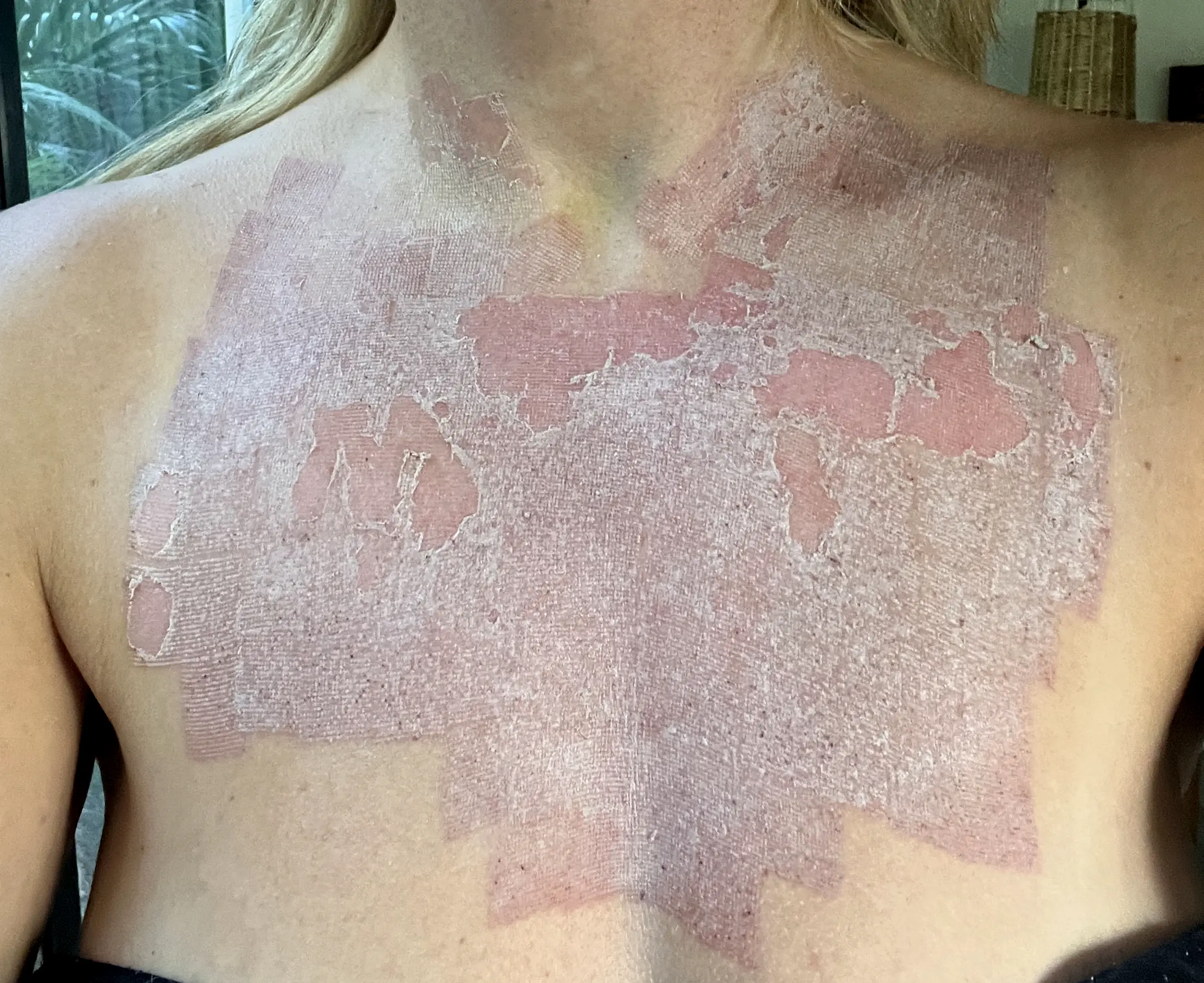
The peeling began around day four, and it reminded me of skin peeling after a bad sunburn. It continued through approximately days five and six. This was also when the itching became intense.
The temptation to pick at the peeling skin was very real, and although I mostly resisted it, I wasn't perfect. Scratching was an even worse idea. Every time I touched an itchy area too aggressively, the skin responded with burning and stinging rather than relief. It was so painful, I had no problem resisting the urge to scratch after that.
By around day seven, most of the obvious peeling had subsided. The redness had not.
Days 8–15: The Redness Stayed
Through days eight, nine, and ten, my chest remained noticeably red. I was extremely careful about sun exposure and continued avoiding pools, cenotes, saunas, and excessive heat as I'd been instructed.
By approximately day 15, the redness had started looking more blotchy rather than uniformly bright red, which at least made it feel like something was changing. The itching had also largely resolved, and I wasn't applying recovery cream quite as frequently.
At this point, though, I was beginning to understand that my CO2 laser downtime was going to be much longer than a week or two.
Day 24 to One Month: Still Visibly Red
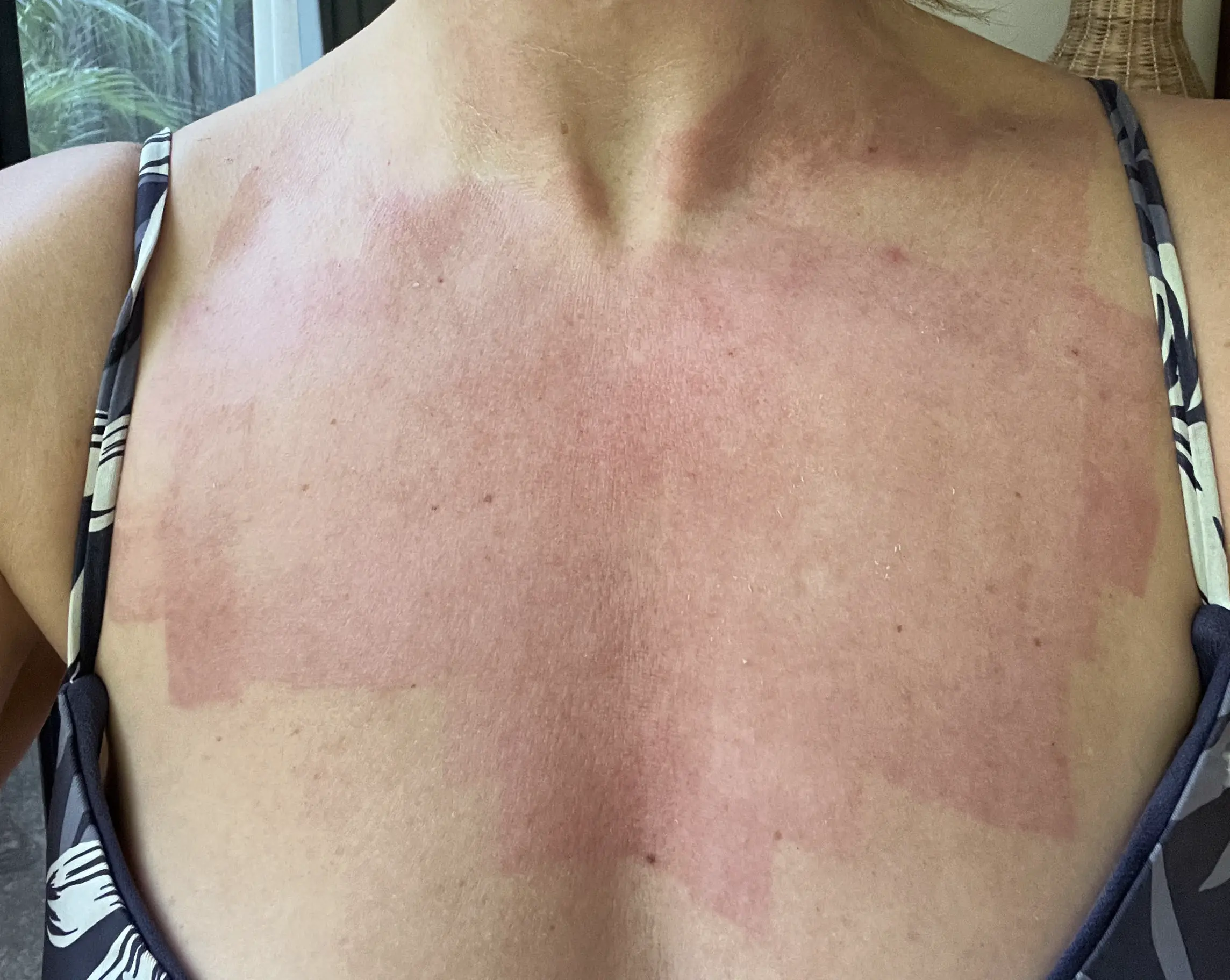
At day 24, there was still obvious redness. It was continuing to fade and become more uneven, but the treatment area certainly wasn't back to normal. I was also still trying to keep it covered despite being in Tulum, which isn't exactly the easiest place to avoid heat, sweat, and sunshine.
Once I returned to Canada, I passed the one-month mark and still had noticeable redness. Before leaving Mexico, I'd checked in with Cell Skin and was told I should expect a longer recovery than I'd originally hoped. At that point, it became clear that this wasn't going to be a quick treatment followed by a couple weeks of hiding under a shirt. The healing process was going to take months.
Two Months After CO2 Laser: I Still Had Marks
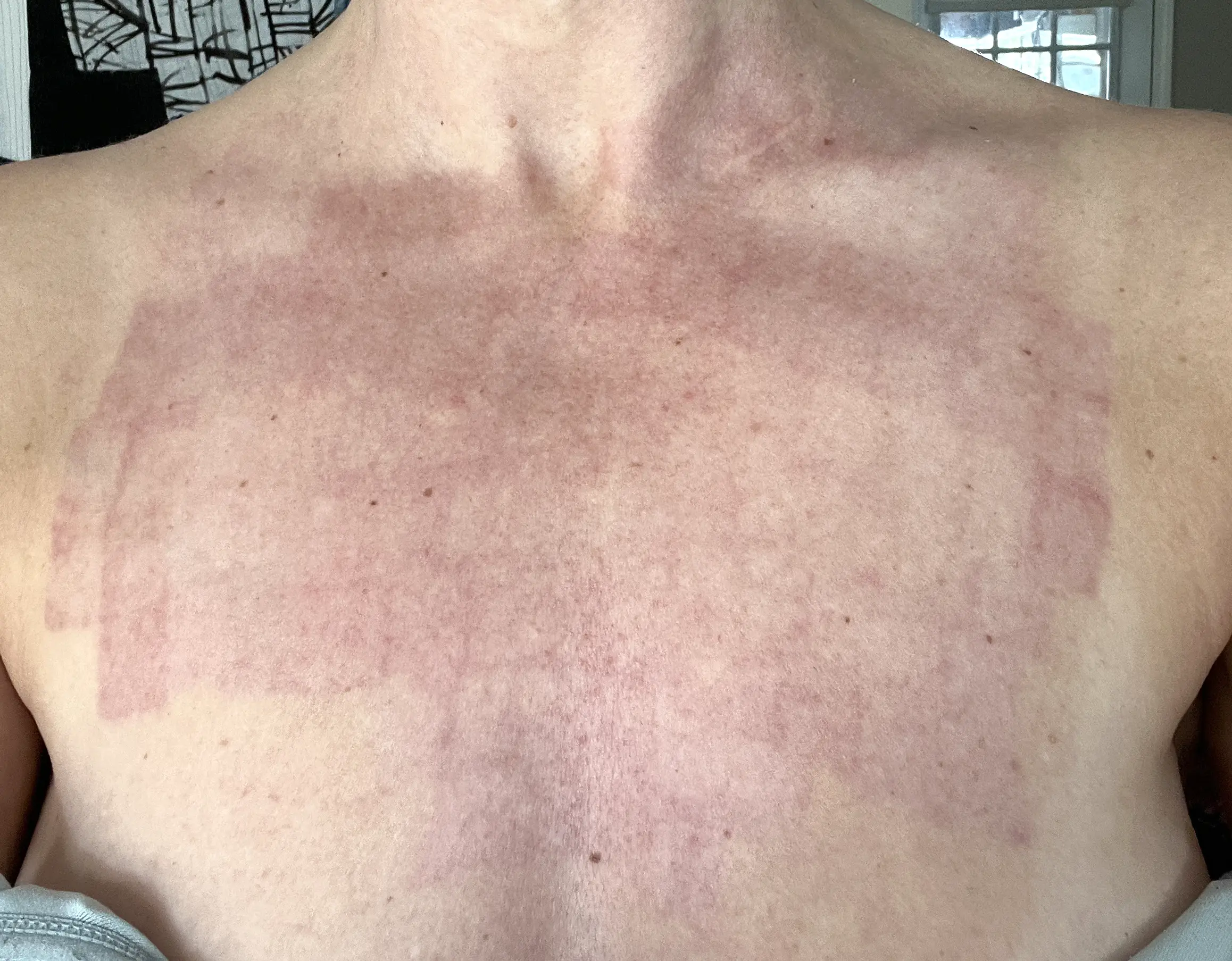
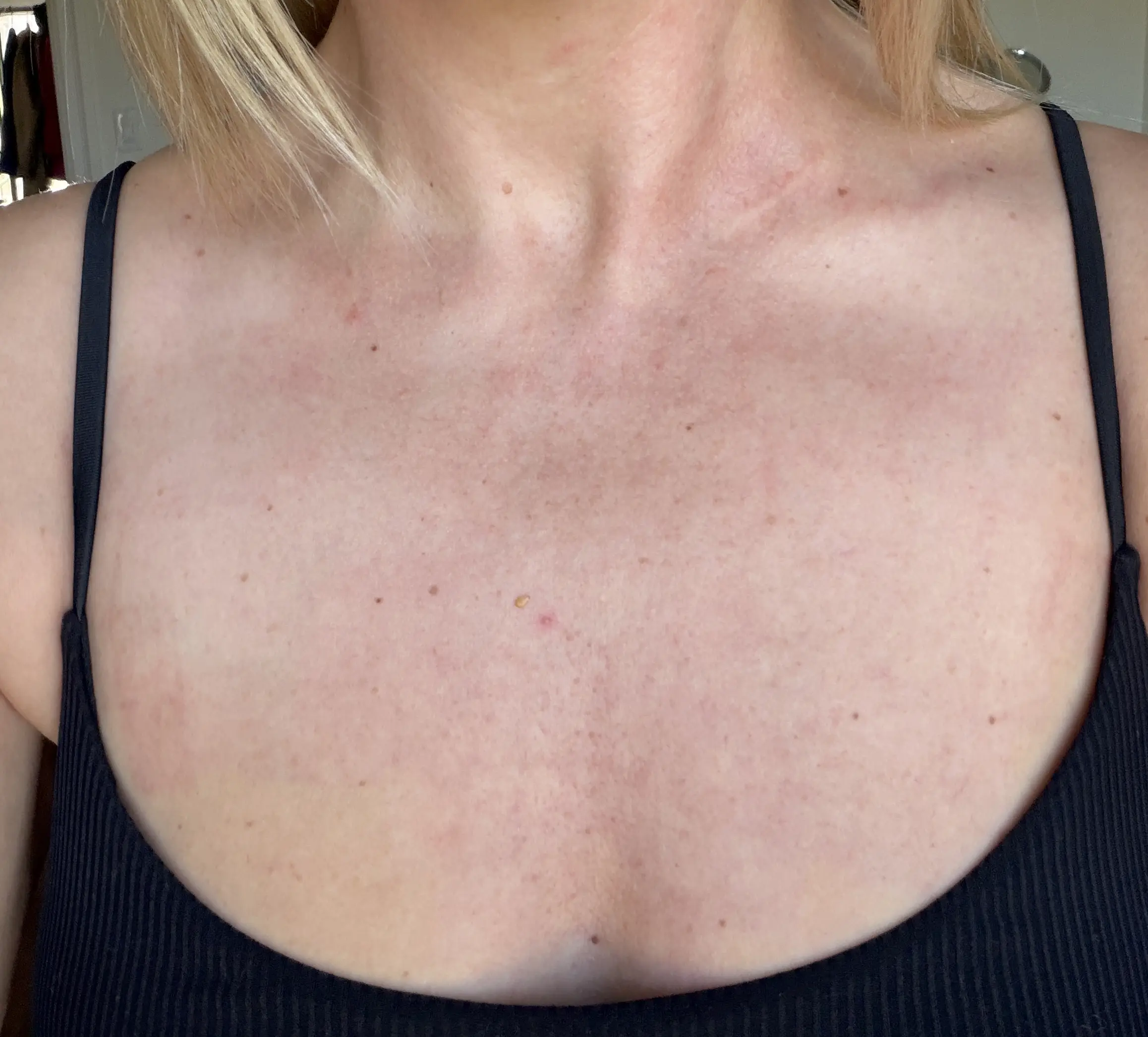
This was the point that surprised me most. My procedure was on May 2, and by early July—two full months after my CO2 laser treatment—I expected the skin to look essentially healed.
It didn't. The marks had improved, but they hadn't completely disappeared. That meant my personal CO2 laser recovery timeline was longer than I'd anticipated and longer than the timeline I'd initially had in my head going into the treatment. That doesn't necessarily mean something had gone wrong. Healing time after laser resurfacing can depend on many factors, including the device, treatment settings, treatment depth, body area, skin characteristics, aftercare, and individual healing response.
It does mean I wish I'd understood beforehand just how long the visible recovery could potentially last.
Does CO2 Laser Take Longer to Heal on the Chest?
This became one of my biggest questions during recovery. Most of the dramatic CO2 laser recovery timelines I'd seen online focused on facial treatments, yet I had treated my chest. I hadn't found nearly as many detailed examples showing chest healing week by week. Different areas of the body don't necessarily heal identically, which is one reason I wouldn't use my timeline, or someone's seven-day facial laser recovery video, as a guarantee of what your own recovery will look like.
The treatment settings matter too. “CO2 laser” isn't one standardized experience. There's fully ablative laser and fractional. I had fractional laser which has less depth and treat tiny, scattered micro-sections of the skin compared to ablative lasers which remove the entire top layer of the treatment area. The intensity and depth of treatment can vary significantly, which can affect both the result and the amount of downtime involved.
What I Wish I'd Known Before CO2 Laser
The biggest thing I underestimated was the downtime. I knew my skin would be red and peel. I didn't fully appreciate that I could still have visible marks two months, 3 months and even 4 months later.
I also would never choose to do this particular treatment during a hot, sunny period again. Trying to protect a healing chest from UV exposure while living in Tulum meant thinking constantly about clothing, heat, sweat, pools, cenotes, and the beach.
If I ever repeat a larger CO2 laser treatment, I'd strongly prefer doing it during colder months when I'm naturally wearing more clothing and spending less time in direct sun. I'd also have a much more detailed conversation about pain management.
Topical numbing cream was not enough to make this particular treatment comfortable for me. If I were considering CO2 laser on my face in the future, I'd want to discuss pain-control options with the qualified clinician performing the procedure before deciding whether to go ahead.
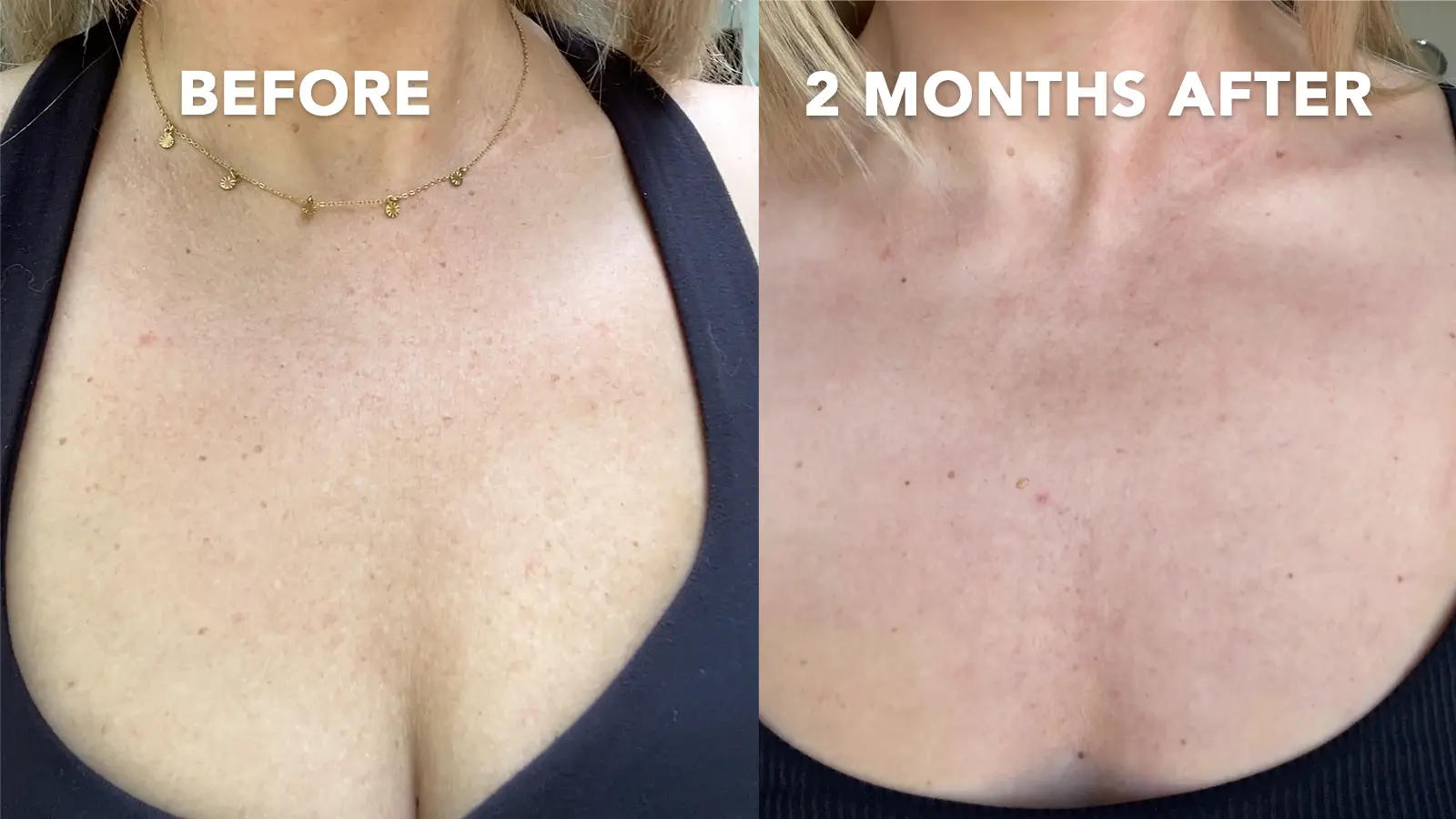
CO2 Laser Before and After: Did It Improve My Chest?
This is where I wish I could give you a dramatic reveal. At the two-month point, I wasn't convinced yet and as I share this blog at 4 months recovery I honestly don't see a big difference in my skin.
My chest still has some fine lines, the texture doesn't feel dramatically different to me, and because I still have some visible marks from the treatment, I find it difficult to judge how much pigmentation improvement I ultimately achieved.
That's important because skin-remodeling results and surface healing aren't necessarily happening on the same timeline. Two months and even four month may not represent the final cosmetic result. Some professionals report full collagen remodeling after a CO2 laser treatment takes three to six months
Still, I don't want to turn an uncertain result into a glowing review simply because I went through the treatment. At the point documented in this article, my answer is: I don't know yet.
Was My CO2 Laser Treatment Worth It?
I'm still not entirely sure. I've seen impressive CO2 laser before-and-after results online, particularly on faces, but my experience treating my chest has been much harder to evaluate. I haven't seen any documentation of the chest area for C02 Laser, as it's not as popular as the face area.
The recovery was longer than I expected, the procedure was extremely uncomfortable for me with topical numbing alone, and at four months I'm not seeing enough improvement to confidently say I'd do the same treatment on my chest again.
Would I consider CO2 laser on my face in the future? Possibly. I would approach it differently, though. I'd want to understand the exact laser being used, the settings and expected downtime, see healed results from similar patients, and have a much more thorough conversation about pain management.
Frequently Asked Questions About CO2 Laser Recovery
How long does CO2 laser recovery take?
There isn't one universal CO2 laser recovery timeline. Healing depends on factors including the type of treatment, intensity, body area, skin characteristics, and individual response. In my case, peeling largely resolved within the first week, but redness continued for weeks and I still had visible marks at two months.
When did my skin start peeling after CO2 laser?
My chest started peeling around day four, with most of the obvious peeling occurring during days four through six.
How long did my redness last after CO2 laser?
My redness lasted considerably longer than I expected. It remained noticeable at one month, and I still had visible treatment marks up to three months after the procedure.
Does CO2 laser hurt?
Mine did. I had topical numbing cream for the larger treatment area, and I personally found the procedure extremely uncomfortable. Pain experiences and pain-control approaches vary, so discuss this with the qualified professional performing your treatment beforehand.
Can you go in the sun after CO2 laser?
I was specifically instructed to avoid sun exposure while my skin healed. Follow the aftercare instructions given by your own clinician, since recommendations can depend on your treatment.
Can you swim after CO2 laser?
My clinic instructed me to avoid pools, cenotes, and the ocean during the initial healing period. Your provider should tell you when it's appropriate to resume swimming based on your skin's recovery.
Is CO2 laser worth it for chest wrinkles?
At two months, I couldn't confidently say it was worth it for me. My fine lines were still visible and the prolonged recovery made it difficult to assess my final pigmentation results. I would want to see more long-term chest-specific results before deciding whether to repeat it.
Would I get CO2 laser again?
Potentially on my face, but I'd approach the experience differently. I'd want a detailed discussion about treatment intensity, expected downtime, pain management, and long-term results before booking.
This article documents my personal experience with microneedling, exosomes, and CO2 laser treatment. It is not medical advice, and my experience should not be used to predict your pain, healing time, safety, or results. Laser treatments can carry risks and may not be appropriate for everyone. Consult an appropriately qualified healthcare professional about your individual skin, medical history, treatment options, and aftercare.