

.svg)
WELLNESS EXPERIENCES
Does Sound Healing Work? My Honest Experience in a Jungle Cave
I tried sound healing with Tibetan singing bowls inside a jungle cave near Tulum to find out what it actually feels like, what the research supports, and whether I think it work.
Does Sound Healing Actually Work? My Experience in a Jungle Cave in Tulum, Mexico
Does sound healing actually work, or is it one of those wellness practices that sounds mystical, photographs beautifully, and leaves you wondering whether everyone around you is quietly pretending to feel something? I went deep into the jungle outside Tulum to find out for myself, because apparently my idea of research now involves caves, cenotes, Tibetan singing bowls, and nearly getting taken out by a wasp nest before the actual healing even began.
I went into the experience curious but skeptical. I wasn't expecting a miracle, an out-of-body experience, or some dramatic spiritual awakening; I mainly wanted to understand what sound healing actually feels like, why so many people find it relaxing, and whether I would notice any difference in my own body or mind afterward. Sound has been incorporated into spiritual, ceremonial, and meditative practices across cultures for centuries, and even without attaching anything mystical to it, we already know how dramatically sound can change the way we feel. A favorite song can bring back a memory instantly, ocean waves can make you feel calmer, and an unexpected alarm can make your entire body tense before you've even consciously processed what you're hearing.
What happened to me in that cave was much subtler than some of the extraordinary claims you'll hear about sound healing, but it was also more powerful than I expected. Somewhere between the vibration of singing bowls moving through my body, the acoustics of an enormous underground cave, and an hour with absolutely nowhere else to be, my brain finally got quiet.
First, though, I had to survive the jungle.
Prefer to watch? In this video, I take you deep into the jungle outside Tulum for a private sound healing session inside a cave, from Tibetan singing bowls and body vibrations to an unexpected wasp encounter and a hidden cenote.
What Is Sound Healing?
Sound healing is a broad term used for wellness practices involving sound and vibration, including singing bowls, gongs, drums, bells, chanting, tuning forks, and other instruments. Modern sound baths and sound-healing sessions can look very different depending on who's leading them and the traditions they're drawing from, but the basic experience usually involves sitting or lying down while repetitive or resonant sounds are created around you, giving your attention somewhere to go besides your normal stream of thoughts.
Whether you interpret that experience as meditation, relaxation, spirituality, or something more energetic is going to be personal. In my session, the primary instruments were Tibetan-style singing bowls, including bowls that were placed directly on my body so I could physically feel the vibration rather than simply hear it, which ended up being one of the most interesting parts of the entire experience.
Going Deep Into the Jungle Outside Tulum
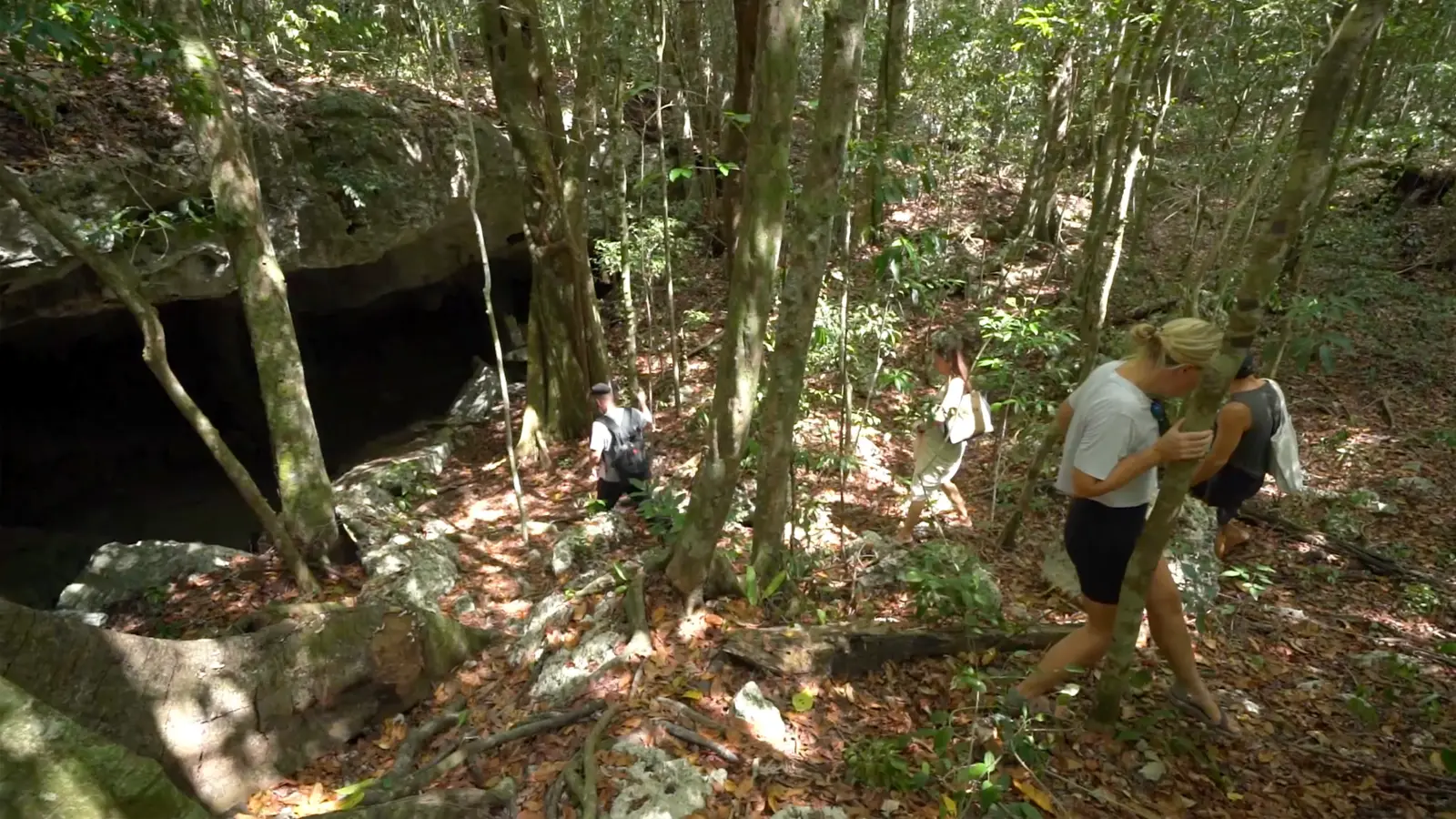
We met our guide, Diego, in Chemuyil, about 20 minutes outside Tulum toward Akumal, and followed him off the main road and deeper into the jungle toward a private cave and cenote where he would lead our session. After about ten minutes of driving, we parked and continued on foot, and I immediately slipped into one of those dreamy, main-character-in-nature moments where everything feels magical. I was admiring the trees, appreciating the silence, feeling grateful to be somewhere so beautiful, and generally feeling very pleased with myself for choosing such a wholesome jungle wellness experience.
Nature had other plans.
Diego casually mentioned that he was keeping an eye out for jaguars, which isn't necessarily the most relaxing thing to hear when you're wandering through dense jungle, and while I was busy trying to look calm and spiritually evolved, I wandered too close to a wasp nest. I panicked, moved exactly the way you're probably not supposed to move around angry wasps, and ended up getting stung three times. Before I'd heard even one singing bowl, the jungle had already delivered its first lesson: pay attention, stop floating through life, and maybe don't wave your arms around near angry insects.
Once I'd confirmed that I wasn't dying and recovered from my brief feeling of betrayal by nature, we continued walking, although I was considerably more alert than I had been ten minutes earlier.
The Cave We Didn't Enter
Further along the trail, we reached a fork, and Diego told us about another cenote down the second path with an altar and what he described as a much heavier atmosphere. He believed the area may have historically been used for ceremonial purposes and didn't consider it somewhere he'd recommend casually relaxing or swimming, and when the person who actually knows the jungle suggests that maybe you don't need to explore one particular mysterious cave, I'm perfectly comfortable taking that advice.
We continued along the other path for another ten minutes or so before finally reaching the cave where our sound healing session would take place, and it was massive. It was the kind of massive that immediately makes you feel very small, like you're stepping into a space that has existed quietly for thousands of years while you arrive carrying a camera, a water bottle, and three fresh wasp stings.
What My Sound Healing Session Actually Felt Like
We explored the cave briefly while Diego prepared everything, then settled into a lower section he'd chosen specifically for its acoustics, and that's when the entire day shifted. The adventure part became quieter, the anxiety about jungle wildlife started fading into the background, and suddenly there wasn't much to focus on except the cave, the sounds, and my own body.
Diego used several singing bowls that produced completely different tones depending on their size. Some sounded light and almost delicate, while others created deeper, resonant vibrations that seemed to move through the cave rather than simply fill it, and because of the natural acoustics, the sound lingered in a way that made it difficult to tell exactly where it was coming from.
Then he placed some of the bowls directly on my body.
That was the part I found most interesting because when a singing bowl resting on your abdomen or chest is struck, you're not simply hearing the sound anymore; you can physically feel the vibration moving through you. It wasn't uncomfortable or dramatic, and I wouldn't describe it as some mysterious surge of energy moving through my body, but it did make the experience feel much more physical than I'd expected. The sound had almost become something tangible.
The Moment My Brain Finally Got Quiet
At first, I wasn't relaxed at all. I was still thinking about the wasps, remembering Diego's jaguar comment, wondering whether there were scorpions nearby, and questioning whether lying on a cave floor in the Mexican jungle was actually a peaceful wellness experience or the opening scene of a survival documentary.
Eventually, though, that mental noise started fading. The repetitive sounds gave my attention somewhere to go, and once I stopped analyzing every sensation and wondering what I was supposed to be feeling, I slipped into that strange state somewhere between sleeping and being fully awake. I wasn't asleep, but I wasn't actively thinking either; there was no phone to check, no work to do, no conversation to maintain, and no mental list of everything waiting for me later.
For maybe the first time that day, my body was simply allowed to exist, and the hour passed remarkably quickly.
What Does Sound Healing Actually Do?
This is where I think it's important to separate what I experienced personally from what science can actually tell us about sound healing, because the two aren't necessarily the same thing.
Sound clearly affects us, and that doesn't require a mystical explanation. A song can change your mood almost instantly, repetitive sounds can become meditative, and harsh or unexpected noises can trigger an immediate stress response. Research into singing bowl meditation and other sound-based relaxation practices has also produced some interesting findings around perceived stress, tension, anxiety, mood, and relaxation, although the evidence is still relatively limited and doesn't support every health claim you'll encounter online.
There may also be something much simpler happening during a sound-healing session. You're lying still, breathing more slowly, paying attention to repetitive sounds instead of your thoughts, and temporarily removing yourself from your usual stream of notifications, conversations, responsibilities, and distractions. Those conditions alone can make it easier to relax, and I don't think sound healing needs a more extraordinary explanation than that to have value.
What About Healing Frequencies and Energy?
This is where I become considerably more skeptical, because you'll sometimes hear claims that very specific frequencies can realign organs, balance energy centers, repair cells, remove toxins, or treat particular illnesses, and that's much further than I'm willing to go based on the evidence currently available.
I think there's a perfectly reasonable middle ground. Sound and vibration can influence how we feel, and a structured sound experience can create an environment that makes meditation and relaxation easier, but that doesn't automatically mean every frequency has a specific medical effect or that a singing bowl is treating disease. Personally, I don't need those larger claims to justify the experience because feeling deeply relaxed for an hour is already valuable.
Is Sound Healing the Same as a Sound Bath?
The terms sound healing and sound bath are often used interchangeably, although the actual experience can vary considerably. A sound bath usually involves lying or sitting while you're surrounded by sounds created with instruments such as singing bowls, gongs, chimes, or drums, while sound healing can refer to similar experiences that may also incorporate instruments placed directly on the body, chanting, meditation, breathwork, or spiritual practices.
Mine felt more intimate than the large group sound baths I'd seen online because this was a private session inside a natural cave, with some of the singing bowls placed directly on my body. I also think the environment probably mattered almost as much as the instruments themselves, because it's difficult to separate the effect of the singing bowls from the experience of lying deep inside a cave surrounded by jungle with essentially zero connection to normal daily life.
The Secret Cenote After Sound Healing
Sound healing, it turned out, was only half of this particular jungle side quest. Afterward, Diego offered to show us another cave cenote, which meant walking through additional cave passageways, and along the way we passed small paths leading toward shallow pools. Diego told us that a biologist friend believed some of these areas may have been shaped or used by Maya communities in the past, potentially for bathing, gathering, or ceremonial purposes.
I can't independently verify the history of those specific pools, so I treated that as part of the story Diego shared with us rather than established archaeological fact, but hearing it still changed the way I experienced the space. Suddenly I wasn't only thinking about how beautiful everything was; I was wondering how many people might have walked through those same caves long before us and what those underground water systems may have meant to them.
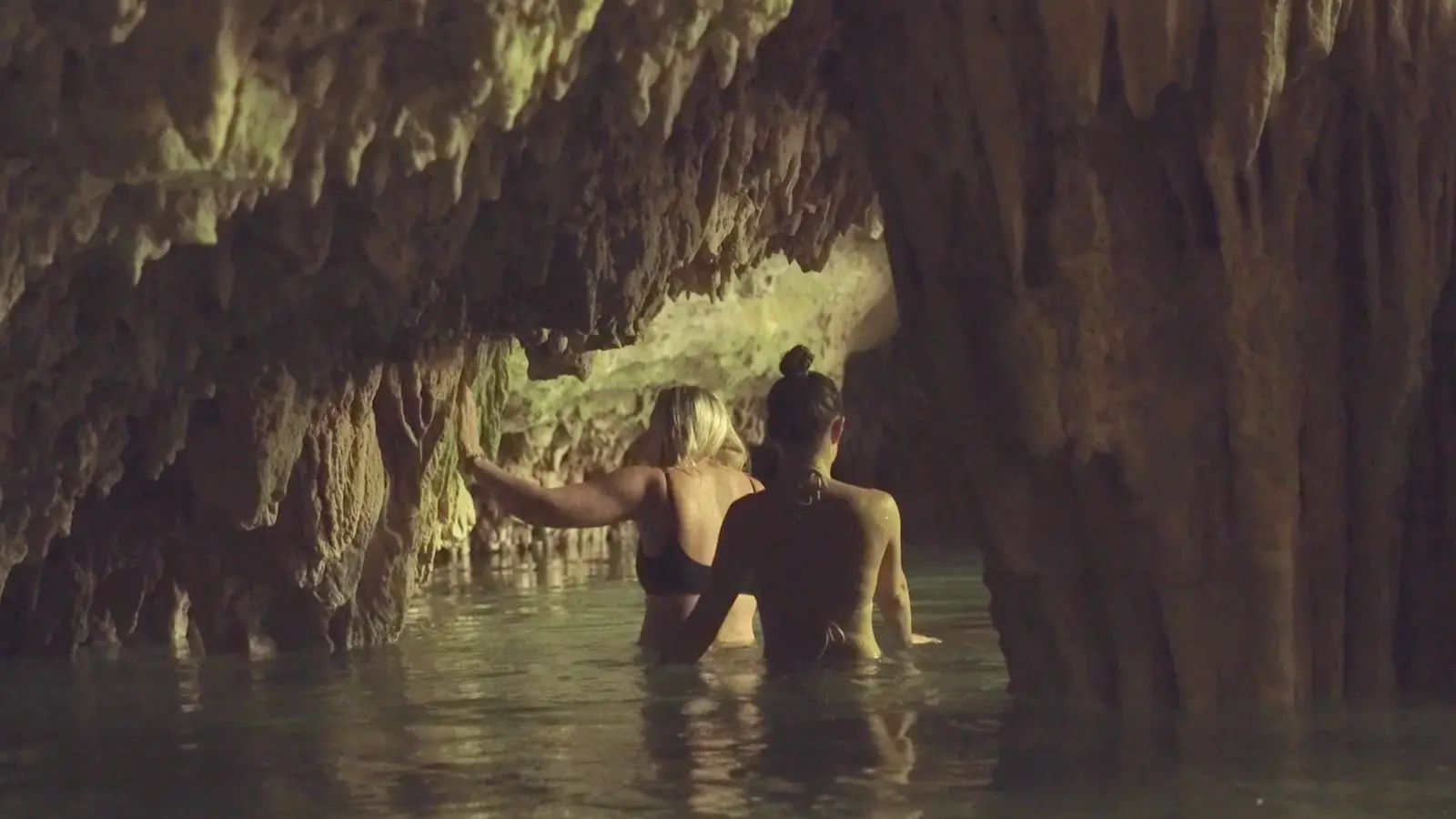
When we finally reached the cenote, my jaw dropped for the second time that day. The water was crystal clear, cool without being painfully cold, and shallow enough that I felt completely comfortable exploring it, so we spent about 30 minutes swimming, floating, and wandering around the surrounding caves. After spending the previous hour lying completely still and listening to singing bowls, finishing the experience floating through an underground cenote somehow felt exactly right.
Does Sound Healing Actually Work?
After trying it myself, I think the answer depends entirely on what you expect the word “work” to mean. If you're expecting sound healing to cure a disease, resolve every emotional problem in your life, or deliver instant enlightenment, I'm not going to tell you it can do those things. If what you're looking for is a structured way to slow down, focus your attention, relax, meditate, and step outside your normal mental noise for a while, then yes, I think there's something worthwhile about it.
My experience wasn't dramatic, and that's actually what I liked about it. I didn't see visions, leave my body, or walk out believing I'd discovered some hidden secret of the universe; my shoulders simply relaxed, my breathing became slower, my brain stopped scanning the jungle for everything that might kill me, and eventually I stopped thinking about much of anything at all. Sometimes subtle is enough.
Would I Do Sound Healing Again?
Absolutely. I wouldn't necessarily need another cave in the Mexican jungle to enjoy it, although I'd happily take one, and what I appreciated most was that there wasn't anything I needed to accomplish during the experience. I wasn't trying to hit a heart-rate zone, lift more weight, optimize a biomarker, improve my appearance, answer an email, or be productive in any measurable way.
I just had to lie there and listen. For someone interested in health, longevity, wellness, and all the different ways we're constantly being told we can improve ourselves, there was something refreshing about an experience where the entire goal was essentially to stop trying so hard for an hour.
Frequently Asked Questions About Sound Healing
What is sound healing?
Sound healing is a broad wellness practice involving sound and vibration through instruments such as singing bowls, gongs, drums, bells, chimes, or chanting. The experience varies depending on the practitioner and may incorporate meditation, relaxation, breathwork, or spiritual traditions.
Does sound healing actually work?
There is some research suggesting that singing bowl meditation and other sound-based practices may support relaxation and improve self-reported measures such as tension, stress, anxiety, or mood. The evidence is much weaker for claims that specific frequencies can treat diseases or create specific physiological changes.
What does sound healing feel like?
During my session, the sounds were deep and resonant and gradually became very relaxing. When the singing bowls were placed directly on my body, I could physically feel their vibrations moving through my chest and abdomen, which made the experience feel very different from simply listening to relaxing music.
Can you fall asleep during sound healing?
I didn't completely fall asleep, but I reached a state somewhere between sleeping and being fully awake. I wouldn't be surprised if some people do fall asleep during particularly relaxing sessions.
Is sound healing spiritual?
It can be, but it doesn't have to be. Some people approach sound healing as part of a spiritual or ceremonial practice, while others experience it simply as a form of meditation or relaxation.
Where did I try sound healing near Tulum?
My private sound healing experience took place in a jungle cave near Chemuyil, between Tulum and Akumal in Mexico's Riviera Maya region.
Would I recommend trying sound healing?
If you're curious about meditation, relaxation, or more experiential forms of wellness, yes. I would go in without expecting a dramatic transformation and simply pay attention to how you actually feel during and after the experience.
My Final Thoughts on Sound Healing
I went into the jungle curious, mildly skeptical, and genuinely unsure whether I would feel anything at all, and I came out calmer. I wasn't transformed, healed of every emotional wound, or suddenly vibrating at some newly discovered cosmic frequency; I was simply quieter internally than I'd been when I arrived.
I think wellness sometimes becomes unnecessarily complicated because we're constantly searching for the biggest possible result: better sleep, longer life, lower stress, improved biomarkers, perfect skin, complete emotional healing. Every experience is expected to optimize something, fix something, or transform us into a better version of ourselves, and maybe that's part of why I appreciated this one so much.
Sound healing didn't need to do any of that for me.
For one hour, I lay on the floor of a cave in the Mexican jungle and listened until my brain finally got quiet. Then I walked deeper underground and floated in crystal-clear water with almost no one else around.
I left with three wasp stings, a story I'll probably tell forever, and the realization that sound healing didn't need to feel miraculous to feel worthwhile. That was more than enough.
This article documents my personal sound healing experience and is intended for informational purposes only. Sound-based wellness practices should not be used as a substitute for appropriate medical or mental health care, and claims about specific therapeutic frequencies or medical benefits may not be supported by strong clinical evidence.