


.svg)
WELLNESS EXPERIENCES
Yoni Massage & Vaginal Steaming: My Tulum Experience
I spent a day exploring pelvic floor bodywork, yoni massage, breathwork, and vaginal steaming in Tulum, and discovered where intimate wellness ends and evidence-based pelvic healthcare begins.
I Spent a Day at a Yoni Spa in Tulum: Pelvic Floor Bodywork, Massage and Vaginal Steaming
I know it might sound a little crazy, but I spent a full day at a spa dedicated almost entirely to my pelvic floor, womb, and, yes, my vagina. Before you click away thinking this sounds ridiculous, hear me out, because we spend enormous amounts of time and money caring for almost every other part of our bodies—facials for our skin, massages for our muscles, workouts for our arms and legs, treatments for our hair, but when was the last time you deliberately thought about your pelvic floor or the muscles quietly supporting your bladder, bowel, reproductive organs, and core every single day?
For most women, the answer might be rarely, if ever, unless something starts going wrong.
That gap was exactly what made me curious about trying integrative pelvic and womb bodywork in Tulum, an experience that combined breathwork, pelvic awareness, abdominal and intimate bodywork, and finally a traditional yoni steam, also known as vaginal steaming. I went into it expecting something somewhere between a spa treatment and one of the more unusual wellness experiences I've been exploring in Mexico, but what I got was considerably more educational, intimate, and thought-provoking than I expected.
There were parts of the experience that overlap with concepts used in established pelvic floor healthcare, other parts that sit firmly in the world of traditional wellness rituals, and some health claims associated with these practices that aren't supported by good scientific evidence at all.
That distinction matters.
So here's what actually happened during my day at a yoni spa in Tulum, what the experience felt like, what surprised me most, and what I learned when I looked more closely at the evidence afterward.
What Is a Yoni Spa?
First, let's talk about the word yoni, because if you've never encountered it before, you might understandably be wondering what we're talking about.
Yoni is a Sanskrit term that can refer to the female reproductive anatomy and has broader symbolic meanings within certain Hindu traditions. In the modern wellness world, however, you'll often see terms such as yoni massage, yoni steaming, yoni spa, or yoni wellness used much more broadly to describe practices focused on intimate female wellness, sexuality, pelvic awareness, or connection with the body.
My experience wasn't really a conventional “spa day” at all. The session was described as integrative pelvic and womb bodywork, combining breathwork and meditation, abdominal and intimate massage/bodywork, and a traditional yoni steam. Our practitioner was Aisha Mallinali, an integral pelvic floor therapist and somatic sexuality coach who has worked with women around pelvic and body awareness for more than a decade.
What mattered enormously to me, considering how intimate this experience was, was that the entire session felt slow, communicative, and consent-focused. Everything was explained beforehand, I knew what was happening before it happened, and I never felt as though I had surrendered control simply because I was receiving a treatment.
That is something I would consider essential for this kind of experience.
Why I Wanted to Learn More About My Pelvic Floor
Part of my curiosity was very practical. The pelvic floor is a group of muscles and connective tissues at the base of the pelvis that plays an important role in bladder and bowel control, pelvic-organ support, sexual function, and core stability, yet it's one of those parts of female anatomy many of us don't think about until we experience symptoms.
If you've ever sneezed, coughed, jumped, or laughed particularly hard and suddenly thought, Oh no, you probably understand why pelvic floor health eventually finds its way onto a woman's radar.
I had started wondering about my own pelvic floor and whether I might have some weakness, so the idea of spending several hours actually learning about this part of my anatomy fascinated me. I wasn't going into the experience expecting someone to diagnose or cure anything; I was curious about what pelvic-focused bodywork actually involved and what I might learn simply by paying attention to a part of my body I'd mostly ignored.
Prefer to watch? In this video, I take you inside my intimate wellness experience in Tulum, from pelvic floor breathwork and yoni bodywork to a traditional vaginal steam, while exploring what these practices actually feel like and what the science does, and doesn't support.
How to Choose a Pelvic Floor Specialist
I choose to do this work with Aisha Mallinali, a well-known womb healer in the Tulum area who has worked with thousands of women over the past 10 years. She is expectionally patient, a talented healer and does everything with informed consent.
With any kind of intimate pelvic floor or internal bodywork, choosing the right practitioner matters enormously. Take the time to research their training, experience, approach to consent, and professional background, and make sure you feel completely comfortable asking questions and stopping at any point. Professional guidance around pelvic examinations likewise emphasizes informed consent, communication, and patient control throughout intimate care.
Pelvic Floor Breathwork That Turned Into an Actual Workout
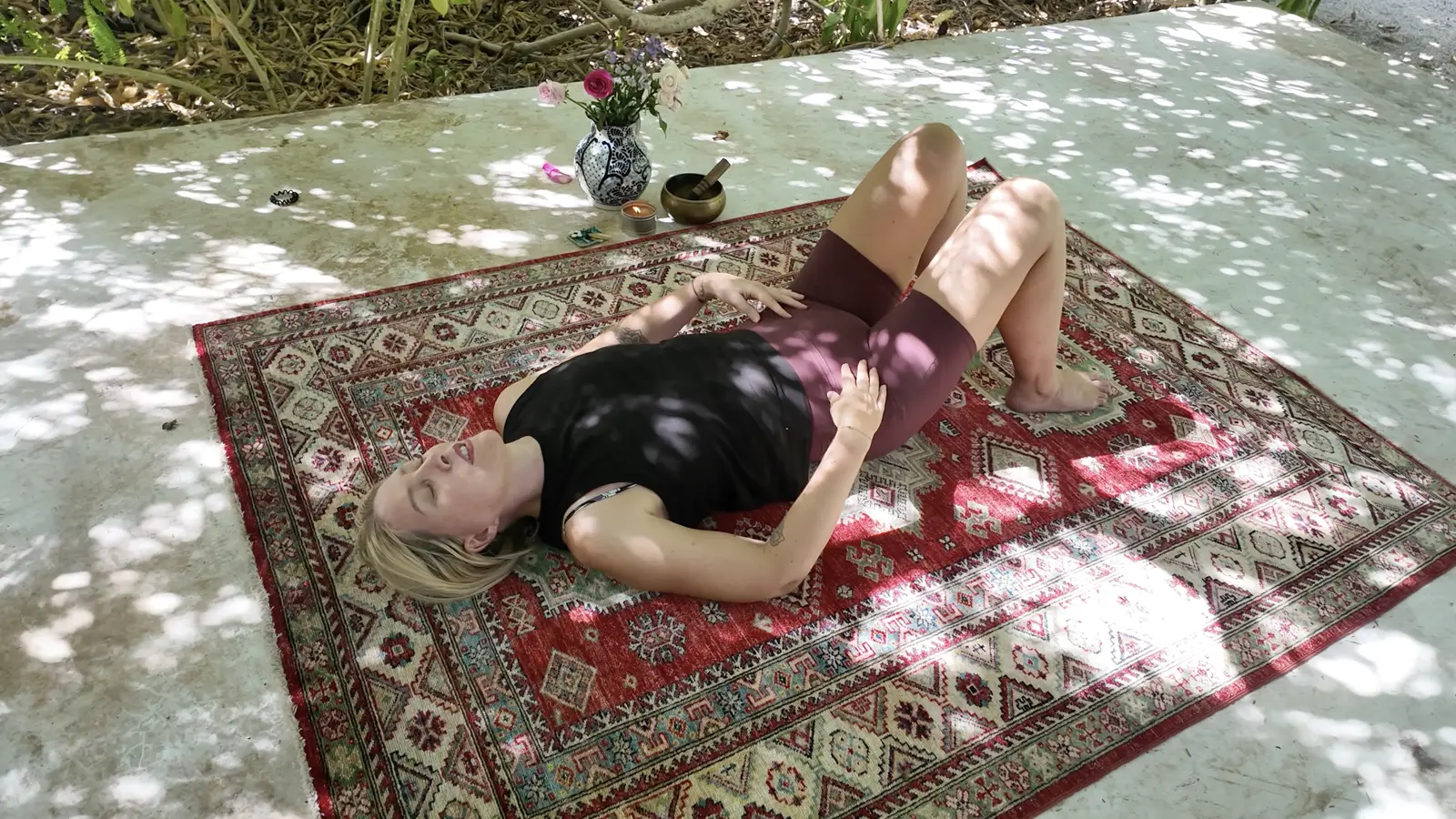
We started beneath the meditation tree at Oasis Tulum, which was about as perfect a setting as you could imagine for slowing everything down. After setting an intention for the experience, we moved into breathwork and gentle movements designed to bring awareness to the pelvis and pelvic floor, and this is where I discovered that I had seriously misunderstood what breathwork could involve.
I'd always pictured breathwork as lying peacefully on the ground taking very intentional deep breaths while someone played relaxing music nearby.
I was sweating within minutes. We moved through different breathing patterns, pelvic tilts, stretches, contractions, and movements that required much more engagement than I'd expected, and at one point it genuinely started feeling like an abdominal workout. The interesting part was how much attention the exercises required because instead of simply performing a movement, I was trying to notice what was happening internally and how my breathing connected with muscles I normally don't consciously think about.
By the time we finished, I understood the appeal much better. Whether or not you attach any spiritual meaning to breathwork, spending that much time deliberately paying attention to breathing and movement creates a very different experience from rushing through a normal day without thinking about either one.
What Is a Yoni Massage?
This is probably the part people will be most curious about, so let's just talk about it. From the breathwork, we moved into the abdominal and yoni massage/bodywork portion of the experience. This involved working around the lower abdomen and pelvic region before eventually progressing to intimate external and internal bodywork.
Aisha worked slowly and explained each stage before moving forward, and nothing happened without clear communication and consent. That mattered enormously because this is inherently intimate work, and regardless of the wellness terminology surrounding it, I would consider practitioner training, boundaries, hygiene, informed consent, and your own comfort level extremely important if you're considering anything similar.
The external portion involved the vulva and surrounding tissue before progressing, with my consent, to internal pelvic bodywork. This was not remotely like getting a Swedish massage.
I wasn't lying there drifting off while someone worked out a knot in my shoulder. The experience required me to stay aware of what I was feeling and communicate throughout it, and some areas were noticeably more tender or uncomfortable than others.

What I Learned During the Pelvic Bodywork
One of the things I found most interesting was simply becoming more aware of my own anatomy. During the session, Aisha guided me through what she was noticing and encouraged me to pay attention to areas that felt different, tense, sensitive, or tender. As the internal portion continued, she worked around different areas of the vaginal walls and pelvic floor, and there were definitely spots where I felt more sensitivity than others.
I want to be careful not to interpret that as proof that I was “storing trauma” in a particular muscle or that tenderness automatically means there's an underlying problem, because that's a leap I can't substantiate. What I can say is that the experience made me pay attention.
That might sound ridiculously simple, but I realized how rarely I'd actually thought about these muscles despite living in this body my entire life. We routinely learn to identify tight hamstrings, sore shoulders, or a stiff back, yet many women have very little understanding of what a relaxed, tense, weak, or overactive pelvic floor actually feels like. That realization was probably one of the most valuable things I took from the entire day.
Is Yoni Massage the Same as Pelvic Floor Therapy?
This distinction is important because yoni massage or integrative pelvic bodywork should not automatically be treated as interchangeable with clinical pelvic floor physical therapy.
Pelvic floor physical therapy is a healthcare discipline in which appropriately qualified professionals assess and treat pelvic floor dysfunction. Depending on someone's symptoms and needs, clinical pelvic floor therapy may involve education, exercises, breathing techniques, external assessment, internal examination or treatment, and other interventions.
People may seek pelvic floor physical therapy for concerns such as urinary or fecal incontinence, pelvic pain, painful intercourse, pelvic organ prolapse, pregnancy and postpartum recovery, or other pelvic-floor-related symptoms.
The bodywork I experienced incorporated some overlapping concepts, particularly pelvic awareness, breathing, muscle tension, and internal bodywork, but it took place within a broader integrative wellness experience rather than serving as a replacement for medical diagnosis or clinical pelvic floor rehabilitation. If you're experiencing actual symptoms, I would start with an appropriately qualified healthcare professional rather than assuming a wellness treatment can tell you what's wrong.
Trying a Traditional Yoni Steam
We moved into the final part of the experience: yoni steaming, more commonly called vaginal steaming or V-steaming. This is probably the most recognizable, and most controversial part of the modern yoni-wellness world.
For our session, we used a mixture of basil, chamomile, rosemary, and dried rose petals. We spent time smelling and even tasting some of the herbs before adding them to the steam, while setting intentions around what we wanted to release or invite into our lives.
Then came the actual steaming. The steam itself wasn't painfully hot in my experience. It was warm, fragrant, and surprisingly cozy, and we continued incorporating breathing and gentle movement as we sat over it. About 30 minutes into the experience, I had completely settled into it and understood why people might approach this as a ritual rather than simply another wellness treatment.
That distinction is important because ritual value and medical benefit are not the same thing.
I can say that the experience felt grounding, intentional, warm, and relaxing. I cannot tell you that the steam was balancing my hormones, detoxifying my uterus, improving fertility, or medically treating my pelvic floor.

Does Vaginal Steaming Actually Work?
This is where the evidence becomes much less convincing.
Vaginal steaming has been promoted for a long list of supposed benefits, including hormone balance, fertility, menstrual symptoms, postpartum recovery, vaginal cleansing, and “detoxification,” but those claims aren't supported by strong clinical evidence.
The vagina is also self-cleaning and doesn't need steam, herbs, douches, or other products to “detox” it. There are potential downsides to consider as well. Steam that's too hot can burn extremely sensitive tissue, and introducing heat, moisture, herbs, or other substances around the vulva and vagina may cause irritation or potentially interfere with the area's normal environment.
That doesn't mean my experience was meaningless. It means I think we need to stop treating “this felt good” and “this medically treated something” as though they're the same statement.
They're not. For me, the yoni steam was a ritual. It created an intentional period of time to slow down, sit with my body, and think about a part of myself I normally only pay attention to when something feels wrong. I enjoyed that experience on its own terms. I don't need to claim that it detoxified my uterus to justify enjoying it.
Is Pelvic Floor Therapy Evidence-Based?
This is where it's important not to lump everything I did that day into one category. Pelvic floor physical therapy is an established area of healthcare, and qualified pelvic health professionals work with conditions including urinary incontinence, pelvic pain, and other types of pelvic floor dysfunction.
That does not mean every service marketed using terms such as “womb healing,” “yoni massage,” or “pelvic healing” has the same evidence base or professional standards.
This is why credentials matter. If you're looking for treatment because you're leaking urine, experiencing pain during sex, dealing with persistent pelvic discomfort, recovering after childbirth, or concerned about another pelvic health symptom, I'd look specifically for a qualified healthcare provider with recognized pelvic-health training.
A wellness ritual can complement the way you care for yourself. It shouldn't replace healthcare when healthcare is what you need.
What Surprised Me Most About Spending a Day Focused on My Pelvic Floor
Going into this experience, I thought the most interesting part would probably be the yoni massage or vaginal steaming simply because those are the things that sound unusual enough to make people stop scrolling.
What surprised me was that the most valuable part was much less provocative. It was awareness. I spent hours thinking about muscles, anatomy, sensations, and parts of my body I'd spent decades barely considering. I learned how disconnected I'd been from my pelvic floor simply because I'd never been given much reason to think about it.
That alone made me start asking better questions about my own health. Do I have pelvic floor weakness? Am I engaging these muscles correctly? Are there things I should be doing as I get older to protect pelvic health? What symptoms have I normalized that might actually be worth discussing with a professional?
Those are questions I can take to an appropriately qualified healthcare provider, and I think that's ultimately much more useful than walking away believing a single wellness session fixed something.
Would I Do a Yoni Spa Day Again?
Yes, although I'd go back for slightly different reasons than I went the first time. I initially booked the experience because it sounded fascinating, unusual, and unlike anything I'd done before. I left thinking much more seriously about pelvic floor health and how little attention many of us give this part of our bodies until there's a problem.
I also appreciated how intentionally the experience was structured. The breathing and movement brought my attention inward, the bodywork made me more conscious of my anatomy, and the steam created a quiet ritual at the end where there wasn't anything left to do except sit.
Not every part of that needs to be scientifically proven to have personal value. The important thing, for me, is knowing where that line sits.
Frequently Asked Questions About Yoni Massage, Pelvic Floor Bodywork and Vaginal Steaming
What is a yoni massage?
The term yoni massage can refer to different types of intimate bodywork involving the vulva, vagina, pelvic region, or surrounding tissues, often within a wellness, somatic, or spiritual context. Because training and professional standards can vary considerably, it's important to understand exactly what a practitioner offers before booking.
What does yoni massage feel like?
My experience involved both external and internal bodywork and felt much more therapeutic and educational than relaxing. Some areas felt completely comfortable, while others were tender or sensitive. Clear communication and consent were maintained throughout my session.
Is yoni massage the same as pelvic floor physical therapy?
No. While there can be overlap in concepts such as pelvic awareness and internal bodywork, clinical pelvic floor physical therapy is a healthcare service performed by appropriately qualified professionals. I wouldn't assume a practitioner offering yoni massage has equivalent clinical credentials.
What is vaginal steaming?
Vaginal steaming, sometimes called yoni steaming or V-steaming, generally involves sitting or squatting over warm water infused with herbs so steam reaches the external genital area.
Does vaginal steaming detox the uterus?
There isn't good scientific evidence that vaginal steaming detoxifies the vagina or uterus. The vagina naturally maintains and cleans its own environment, and steam does not need to be used for vaginal cleansing.
Does vaginal steaming balance hormones or improve fertility?
Claims that vaginal steaming balances hormones or improves fertility aren't supported by strong clinical evidence. Anyone experiencing fertility, hormonal, menstrual, or gynecological concerns should discuss them with an appropriately qualified healthcare provider.
Can vaginal steaming be dangerous?
There are potential risks, particularly burns if the steam is too hot and irritation from heat or herbs. It's especially important to seek medical guidance if you're pregnant, postpartum, experiencing vaginal or pelvic symptoms, or have another health condition that could make steaming inappropriate.
Does pelvic floor therapy help with bladder leakage?
Pelvic floor physical therapy is commonly used as part of treatment for certain types of urinary incontinence. If you're experiencing bladder leakage, a pelvic health professional can assess what's actually happening rather than assuming you simply need to strengthen the muscles.
My Final Thoughts on My Yoni Spa Experience
I spent a day at what I'm jokingly calling a spa for my vagina, but I walked away thinking much less about my vagina specifically and much more about the relationship women have with their bodies.
We're taught to notice wrinkles, weight, hair, skin, cellulite, and almost every other visible sign of aging, yet some of the muscles that may have a very real effect on our quality of life as we get older remain practically invisible to us until they stop working the way we expect them to. That was my biggest takeaway.
I don't believe vaginal steaming detoxified my body, and I'm not going to tell you that an intimate massage magically released years of stored trauma. I can tell you that spending several uninterrupted hours learning about my pelvic floor, paying attention to sensations I normally ignore, and asking questions about my own anatomy made me more interested in taking care of this part of my health.
The steam was relaxing. The sun halo was beautiful. The intimate bodywork was fascinating. The breathwork was considerably more strenuous than advertised.
The most valuable part, though, was curiosity. Whether this exact experience appeals to you or sounds like your absolute nightmare, I think there's something worthwhile in becoming more curious about your pelvic health as you get older, because wellness isn't only about the parts of ourselves we can see in the mirror. Sometimes it's about finally paying attention to everything underneath.
This article documents my personal experience with integrative pelvic bodywork and vaginal steaming and is intended for informational purposes only. It is not medical advice. If you're experiencing pelvic pain, urinary leakage, painful intercourse, unusual vaginal symptoms, or other pelvic-health concerns, consult an appropriately qualified healthcare professional. Wellness practices should not be used as substitutes for diagnosis or medical treatment.