

.svg)
WELLNESS EXPERIENCES
My Temazcal Experience in Tulum: What Happens Inside
My firsthand experience inside a Temazcal near Tulum, including the four ceremonial doors, intense heat, emotional release, and what I learned from the experience.
My Temazcal Experience in Tulum: What Actually Happens Inside a Mayan Sweat Lodge
I went into my first Temazcal ceremony in Tulum expecting to die, symbolically, not literally, inside a dark, steaming dome in the middle of the jungle. I genuinely had no idea what I was walking into.
A Temazcal is a traditional Mesoamerican sweat-lodge ceremony that combines intense heat, steam, herbs, chanting, ritual, and guided reflection. Depending on the tradition and the guide, the experience can be physical, spiritual, emotional, or all three at once. What surprised me most wasn't simply how hot it became, but how quickly the heat stripped away distraction, comfort, and my usual need to stay in control.
I went into the ceremony curious about what a Temazcal actually feels like and came out understanding why people describe it using language like release, surrender, death, and rebirth. If you're researching what happens during a Temazcal ceremony, especially one in Tulum or the Riviera Maya, this is exactly what happened during mine—from the preparation and four ceremonial “doors” to the moment we finally stepped back into the lagoon afterward.
Prefer to watch? In this video, I take you inside my Temazcal experience near Tulum, from crawling into the dark sweat lodge and moving through the four ceremonial doors to the emotional release and final plunge into the lagoon.
What Is a Temazcal Ceremony?
A Temazcal is a traditional Mesoamerican sweat-lodge ceremony with roots in pre-Hispanic cultures. The word comes from the Nahuatl temazcalli, commonly translated as “house of heat.” The structure itself is typically a small, enclosed dome that becomes increasingly hot as heated stones are brought inside and water is poured over them to create steam.
The experience isn't simply sitting in a sauna. Traditional ceremonies may involve chanting, herbs, offerings, prayer, reflection, and a guide who leads participants through different stages, although the exact meaning and structure can vary depending on the community, tradition, and person leading the ceremony. In ours, the ceremony was organized into four stages, or doors, associated with fire, water, air, and earth, and those four doors became the framework for the entire experience.
Where I Did My Temazcal Ceremony Near Tulum
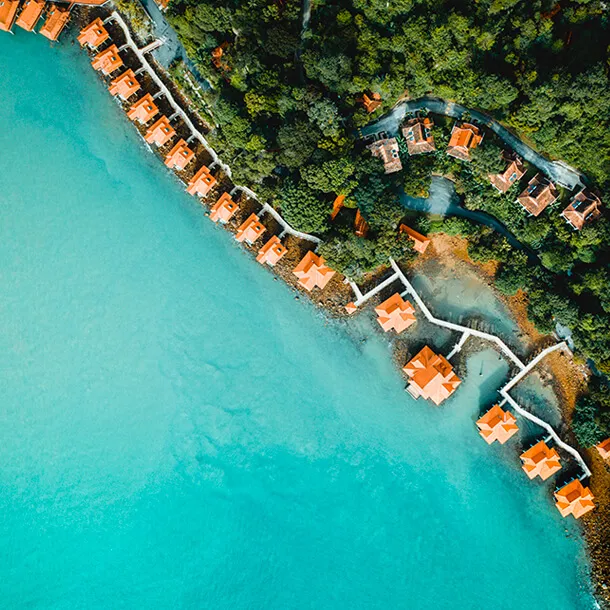
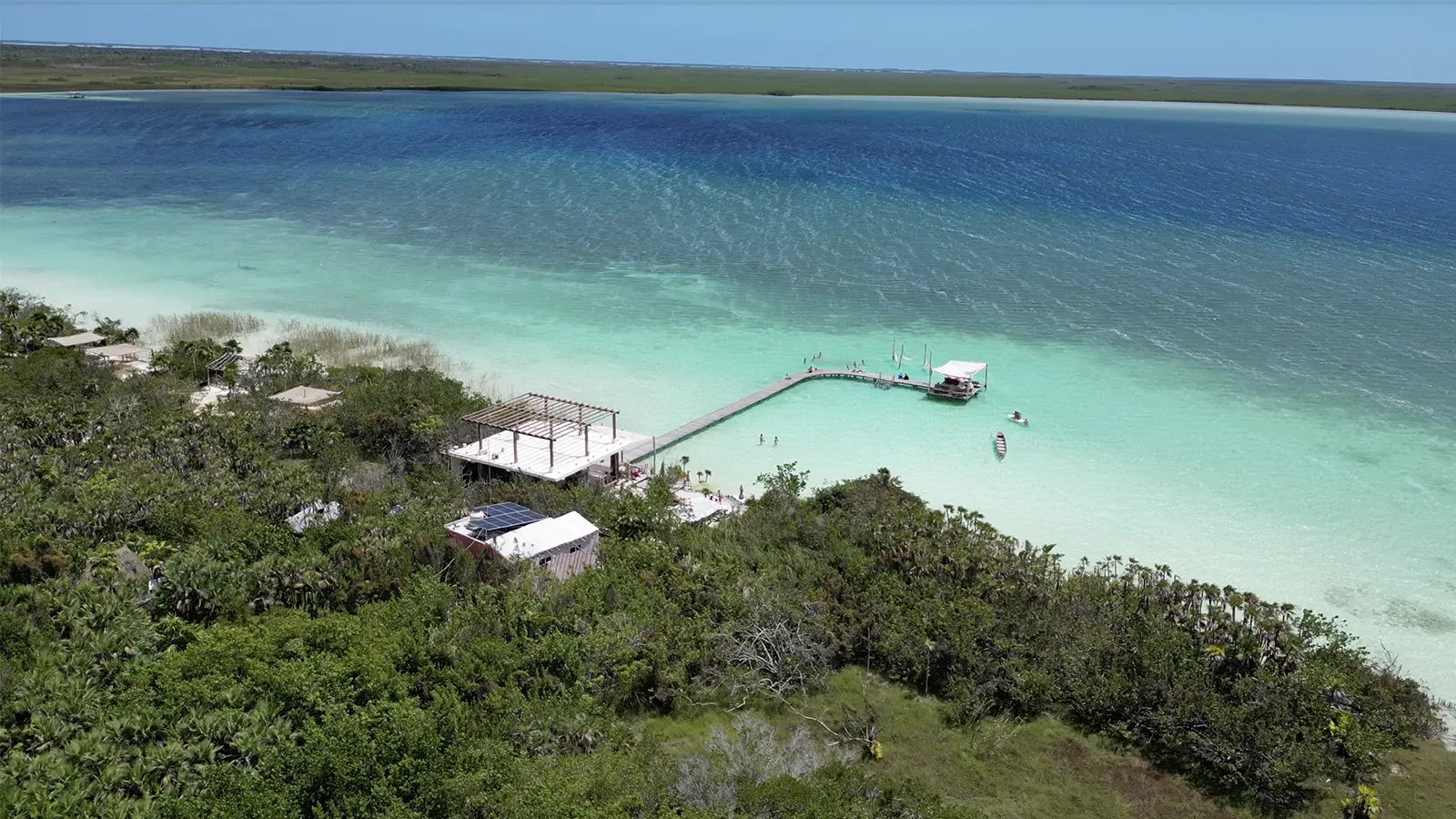
We drove approximately 20 minutes outside Tulum to Nèek at Nopalitos Lagoon, where the jungle opens onto incredibly clear turquoise water. The property already felt removed from the noise and energy of Tulum, with birds everywhere, a peaceful lagoon, and the kind of setting that naturally makes your body slow down.
There was also a Temazcal tucked into the jungle, and that was where our guide suggested we experience the ceremony.
Meeting Our Temazcal Guide
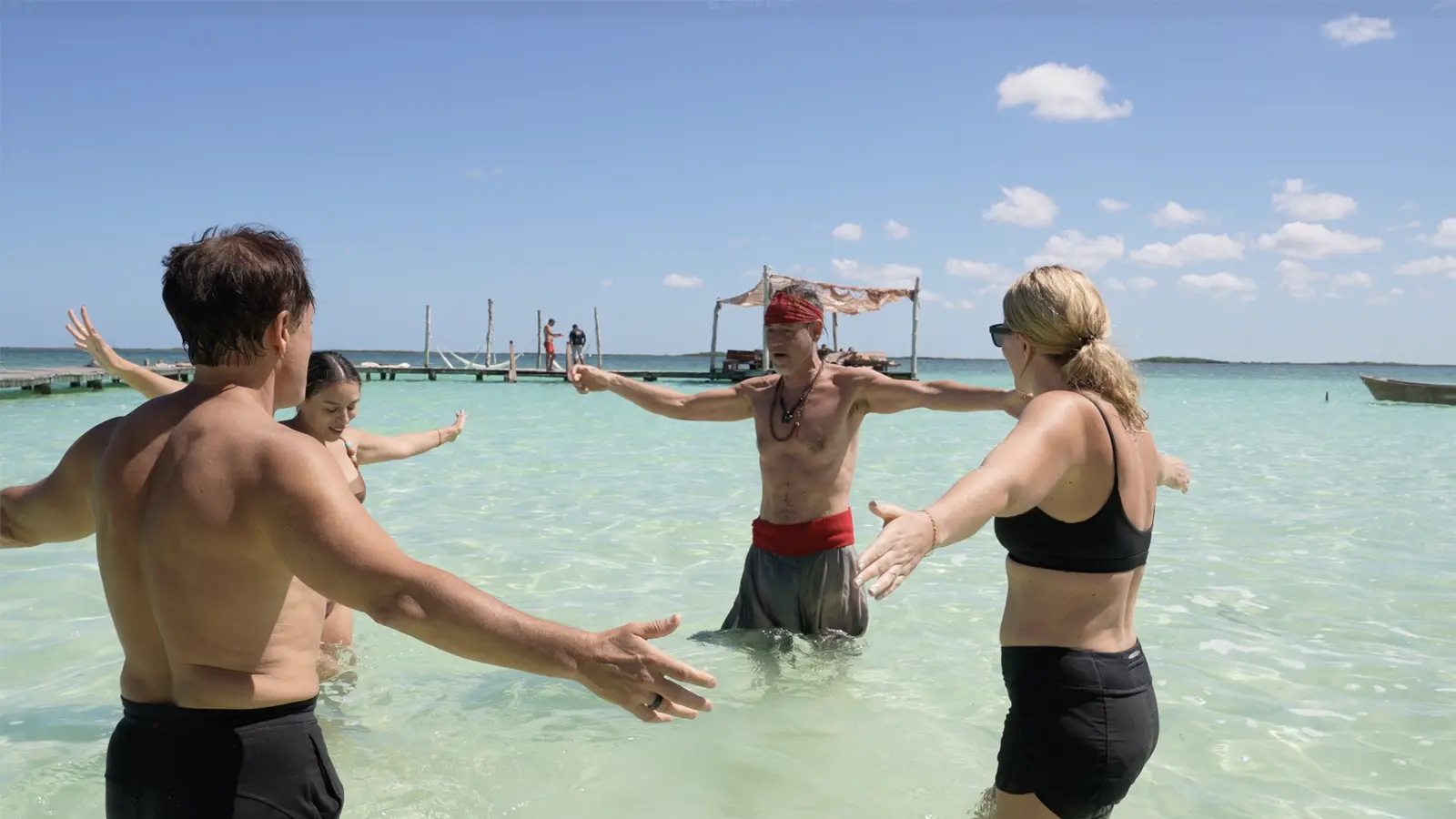
Our guide, Esteban, known as Pluma had spent more than 25 years living among Mayan communities and led the ceremony alongside his Mayan partner, José. There was something immediately grounding about him; he was warm and calm, but there was also an intensity that made the experience feel less like something being performed for tourists and more like something he genuinely respected.
Before we began, he talked to us about consciousness, humility, and the way we protect ourselves emotionally. One of the ideas that stayed with me was his belief that the power wasn't sitting in the guide or even in the ceremony itself, but in what each person was willing to bring into it.
We were introduced to the plants that would be used during the ceremony, including rosemary, ruda, mint, chamomile, and lemongrass, and we were given time to smell and connect with them before going inside. Then each of us received three small objects: a coal stone representing our father, a cacao seed representing our mother, and tobacco representing our ancestors. We were asked to hold them and think about our lineage before placing the offerings into the fire.
It was a simple ritual, but it changed the way I thought about entering the Temazcal. You weren't walking in completely alone; you were carrying everyone who came before you.
Entering the Temazcal
The Temazcal itself was a small, igloo-shaped dome made of stone, which Pluma described as representing the womb of Mother Earth. To enter, we crawled inside on our hands and knees, and that movement was intentional—you enter low to the ground, symbolically returning to the place where life begins, before eventually emerging again at the end of the ceremony. Inside, it was dark and surprisingly cool at first. That didn't last long.
The First Door: Fire and the Heart
The first stage of our Temazcal represented fire and the heart. Glowing volcanic stones were brought into the center of the structure, and when herbal water hit them, the temperature changed almost instantly as steam filled the dome and the air became heavier with every breath.
This first door was described as an opening of the heart, which sounds beautifully poetic when you're standing outside. Inside, it felt much more physical. As the temperature climbed, I became incredibly aware of my instinct to resist discomfort; I wanted to control my breathing, anticipate how much hotter it might get, and mentally calculate how long I could tolerate it.
Eventually, the heat made that kind of control impossible. All I could really do was breathe, listen to the chanting, and stay present, and that's when I started recognizing just how much energy I spend trying to manage everything in ordinary life. The ceremony was asking me to do the opposite: let go.
When the door finally opened briefly between rounds, that rush of cool air felt like one of the greatest gifts I'd ever received.
The Second Door: Water and the Mind
Then more heated stones were brought inside. They were called abuelitas, or grandmothers, and that name immediately changed the way I thought about them. They weren't simply rocks being used to make the room hotter; within the ceremony, they were treated as ancient presences carrying wisdom into the space.
We drew a wet cross on the surface of one of the stones, honoring the four directions, and the heat climbed again. The second door represented water and the mind, and at one point Esteban said that this was where the mind likes to come out and play, but most adults have forgotten how to actually play.
His instruction was essentially to become a little ridiculous, so we did. People shouted, we howled, we made noise, and the seriousness that had filled the room cracked open. For a while, the analyzing part of my brain simply stopped working because there wasn't enough mental bandwidth left for self-consciousness. I was too busy experiencing the heat, and strangely, that felt incredibly freeing.
The Third Door: Air and the Soul
By the third door, the heat had become something completely different. My entire body was drenched, the air felt thick, and I could hear my heartbeat almost as clearly as the chanting around me.
This door represented air, soul, and consciousness, and it was also the stage where I finally understood why people use the metaphor of dying inside a Temazcal. We were asked to think about people who had shaped our lives—those still here and those who had died—and the entire experience became much more emotional.
We were encouraged to use our voices, to call out, and to let things surface rather than trying to stay composed. Something in me broke open, although what came up wasn't one neat memory or one dramatic realization; it felt more like accumulated weight—fear, expectation, grief, responsibility, and the pressure I often put on myself to appear capable and in control.
The heat leaves very little room for performance. Eventually, there is only your body, your breathing, and whatever you're carrying emotionally. That's when the symbolism of death finally made sense to me. Not physical death, but the temporary death of the version of yourself that insists on carrying everything.
The Fourth Door: Earth and the Body
The final door represented earth and the body. After moving through the heart, mind, and soul, the ceremony brought us back to the physical self.
Pluma said something during this part that stayed with me: your body isn't simply flesh, bone, and blood. It is also something mysterious, living, and deeply connected to the natural world. I was sitting there exhausted and soaked in sweat, and suddenly I was very aware of how often I treat my body like a project—something to optimize, criticize, push harder, make younger, make thinner, or somehow improve.
Inside that dark, humid structure, it felt different. My body wasn't a project; it was simply the thing that had carried me through everything the ceremony had asked of me. When the door finally opened for the last time and cool air poured inside, I don't think I've ever felt more grateful for oxygen.
The Rebirth: Walking Back Into the Lagoon
After leaving the Temazcal, we walked back toward the lagoon for the final part of the experience. One by one, we stepped into the cool water, and after being inside that extreme heat, the temperature felt shocking against my skin. We expressed gratitude and then submerged ourselves. When I came back up for air, everything felt unusually quiet.
It sounds dramatic to describe that moment as a rebirth, and I don't mean that I suddenly became a completely different person. It felt more subtle than that, like breathing after holding your breath for a very long time.
What Does a Temazcal Feel Like Physically?
For me, the experience became very hot, very humid, physically demanding, and at times uncomfortable. You're sitting inside an enclosed space while heated stones continually raise the temperature and water creates more steam, and depending on the length and intensity of the ceremony, it can feel dramatically more intense than casually sitting inside a hotel sauna.
I sweated heavily, my heart rate increased, and there were moments when simply concentrating on breathing became the only thing I wanted to do. That's also why I don't think a Temazcal should be approached casually just because it's offered at a resort or wellness destination.
If you have health conditions, are pregnant, have difficulty tolerating heat, take medications that affect hydration or blood pressure, or have any concerns about participating safely, it's worth discussing that with an appropriate healthcare professional beforehand and being completely honest with the guide. There is no spiritual prize for ignoring your body's warning signs.
Is There Science Behind Temazcal?
This is where I think it's important to separate Temazcal tradition from modern heat-therapy research. A Temazcal involves heat and steam, so it's reasonable to look at research surrounding sauna bathing and other forms of controlled heat exposure for context. Research on sauna use has explored potential effects on cardiovascular function, relaxation, blood pressure, and wellbeing, but that doesn't mean every finding from a Finnish sauna study can automatically be applied to a traditional Mesoamerican Temazcal ceremony.
They're not identical experiences. The herbs, chanting, ritual, social environment, temperature, humidity, duration, and emotional components make a Temazcal something much broader than simple heat exposure.
I also wouldn't describe the experience as “detoxing” the body in a literal medical sense. Sweating is real, and I certainly did plenty of it, but the body's major systems for processing and eliminating waste involve organs such as the liver and kidneys. The spiritual concept of purification within a traditional ceremony is different from claiming that sweat is physically extracting toxins from your body.
I think both ideas can coexist as long as we don't confuse them. There is the traditional and symbolic meaning of purification, and then there is what we can responsibly say about physiology.
The Emotional Side of My Temazcal Experience
The emotional effect is much harder to measure. I can't tell you that the ceremony scientifically removed grief or permanently changed my relationship with control, but I can tell you what it felt like.
The darkness, heat, chanting, exhaustion, symbolism, and lack of distraction created an environment where I couldn't easily escape into my phone, work, conversation, or normal routines. There was nowhere else to go, and that forced me inward in a way very few ordinary experiences do. Whether someone interprets that spiritually, psychologically, culturally, or simply as an intense moment of self-reflection is going to be personal. For me, it felt meaningful.
Is a Temazcal Ceremony Worth Doing?
For me, yes. I don't think a Temazcal magically fixes anything. It doesn't erase grief, delete fear, heal every emotional wound, or hand you enlightenment because you spent an afternoon sweating in the jungle.
What it did for me was create a temporary space where distraction, comfort, and control were taken away. Without those things, I could see certain parts of myself more clearly, including how tightly I hold onto control, how quickly my mind tries to solve discomfort, and how often I treat my own body as something that needs constant improvement rather than something worth appreciating.
That was enough. I don't think we need dramatic rebirth experiences every week, but every once in a while, doing something that interrupts your normal patterns and reminds you that you're capable of letting go can be incredibly powerful. The person who crawled into that Temazcal wasn't magically replaced by someone new. She just walked out carrying a little less.
Frequently Asked Questions About Temazcal Ceremonies
What is a Temazcal?
A Temazcal is a traditional Mesoamerican sweat-lodge ceremony involving heated stones, steam, and, depending on the tradition, elements such as herbs, chanting, offerings, prayer, and guided reflection.
What happens during a Temazcal ceremony?
Every ceremony can differ, but mine involved preparation with herbs and offerings followed by four ceremonial stages, or “doors,” associated with fire, water, air, and earth. Heated volcanic stones were brought into the enclosed structure throughout the ceremony while our guides led chanting, reflection, breathing, and ritual.
Is Temazcal the same as a sauna?
Not exactly. Both involve heat exposure, but the Temazcal I experienced was also a guided cultural and spiritual ceremony involving symbolism, chanting, herbs, offerings, and structured stages.
How hot does a Temazcal get?
I wasn't measuring the temperature during my ceremony, but the heat became extremely intense for me as more heated stones were added and water created additional steam. The temperature and intensity can vary depending on the ceremony.
Is Temazcal safe for everyone?
Not necessarily. Intense heat exposure may be inappropriate for some people depending on health conditions, medications, pregnancy, hydration status, or heat tolerance, so ask the provider about safety procedures and consult an appropriate healthcare professional if you have concerns.
What should I bring to a Temazcal ceremony?
The specific provider should tell you what to bring, but for my experience I'd prioritize comfortable clothing or swimwear, water for before and after the ceremony, and an open mind about the fact that the experience may be more physically and emotionally intense than expected.
Where did I do my Temazcal near Tulum?
I experienced my Temazcal ceremony at Nèek at Nopalitos Lagoon, approximately 20 minutes outside Tulum.
Would I do a Temazcal again?
Yes. I wouldn't go into another ceremony expecting exactly the same emotional experience, but I would absolutely do it again for the combination of ritual, reflection, physical challenge, and the sense of perspective I felt afterward.
My Final Thoughts on Temazcal
Before this experience, I understood Temazcal mostly as an ancient sweat-lodge tradition. After going through it, I understand why reducing it to “a sauna in the jungle” completely misses the point. The heat is part of it, but so are the darkness, chanting, ritual, symbolism, people around you, and your own willingness to sit with whatever comes up when your usual distractions disappear.
Did I die in there? Obviously not. Did some small part of the version of me that crawled inside—the part that thinks she needs to control everything—get challenged? Absolutely. Every once in a while, I think that's worth experiencing.
This article documents my personal Temazcal experience and is intended for informational purposes only. Temazcal traditions and ceremonies vary by community and guide, and my experience should not be treated as representative of every Indigenous or Mesoamerican tradition. Intense heat exposure can carry health risks, so speak with an appropriate healthcare professional if you have medical concerns and follow the safety guidance of your ceremony provider.