


.svg)
COSMETIC SURGERY
3 Months After My Facelift: Honest Recovery Update
Three months after my deep plane facelift, I'm sharing an honest look at my scars, numbness, lip lift, lower bleph results, and how my feelings about surgery have changed since month one.
I'm officially three months post-facelift, and I want to share where things actually stand: what I look like, how my scars are healing, what still feels strange, and perhaps most importantly, how differently I feel about my decision compared with my one-month update.
At one month, I was struggling. I was unhappy with how I looked, hyperfocused on every small change, and honestly unsure what to make of the entire healing process. Three months after my deep plane facelift, neck lift, lip lift, and lower blepharoplasty, I can finally say something I wasn't ready to say then: I don't regret having the surgery.
In three dimensions, in the mirror and in real life, I genuinely love a lot of what I see. Watching myself back on camera is something I'm still working through, which is particularly interesting when so much of my life involves being on camera. Certain angles and expressions still look unfamiliar to me, and I can still find things to obsess over if I let myself.
Three months sounds like enough time that you'd expect to feel settled, confident, and finished, but my recovery simply hasn't worked that way. Some days I look in the mirror and genuinely love what I see, while other days I catch my reflection and feel like I'm looking at someone I don't fully recognize yet.
People around me, including those I've shown my scars to directly, insist they can barely see anything. Meanwhile, I'm capable of examining a millimeter of asymmetry like I'm conducting a forensic investigation.
I've become particularly focused on the proportion of my mouth to my nose since the lip lift, and I've also started noticing asymmetries in my face that actually trace back much further than this surgery. That's a longer story I may share separately, but it has made me realize how dramatically cosmetic surgery can change the way you examine a face you've looked at your entire life.
When I put my before-surgery, one-month, and three-month facelift photos next to each other, the physical progress is obvious. Emotionally, it doesn't always register that way in the moment. I think that gap is worth talking about.
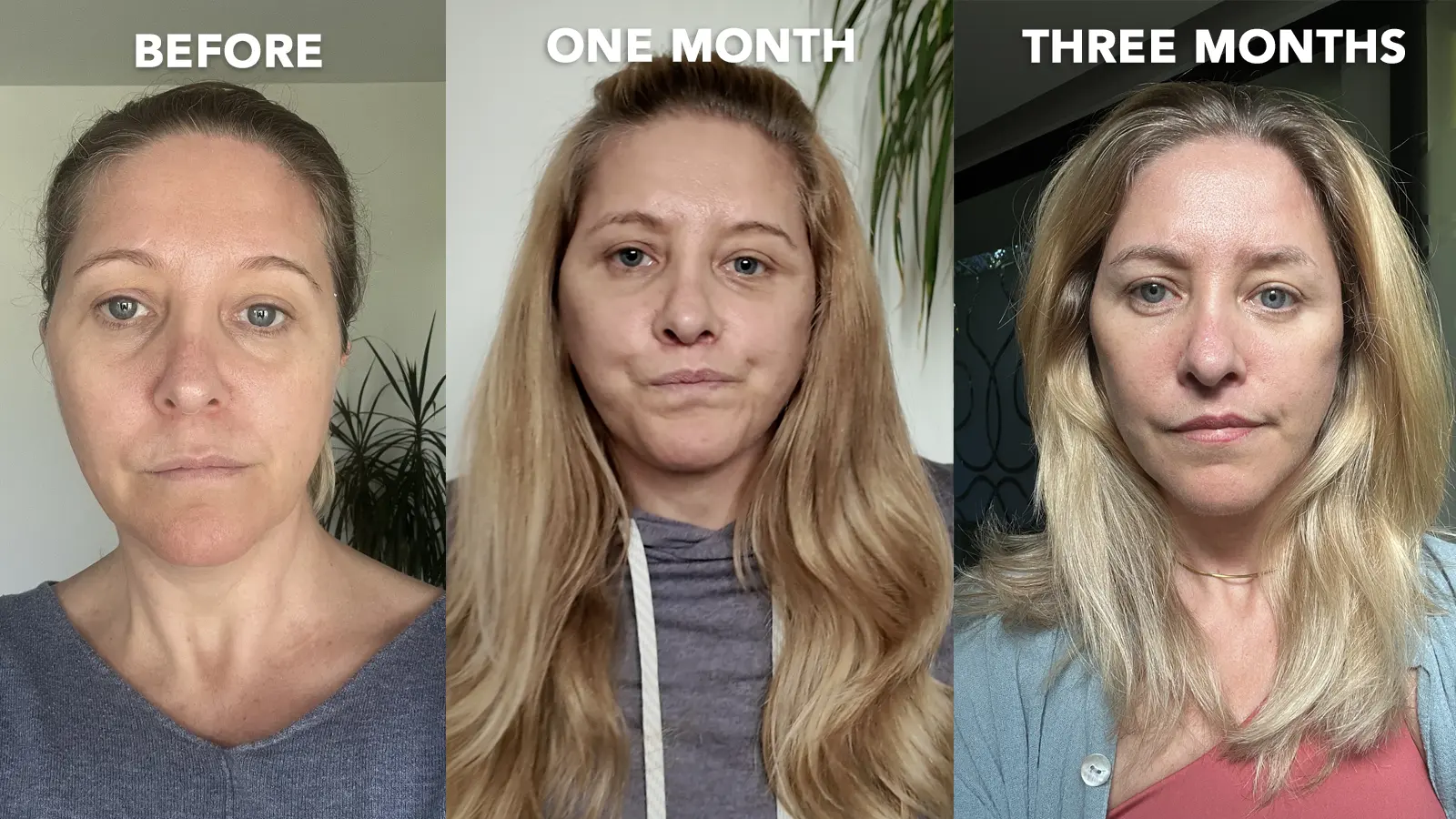
Prefer to watch? In this video, I show you what my face looks like three months after my facelift, neck lift, lip lift, and lower blepharoplasty, including how my scars are healing, what I'm still struggling with, and why I feel very differently about my decision than I did at one month.
My Deep Plane Facelift Recovery at Three Months
Three months after my facelift, I still have noticeable numbness along the sides of my face. I catch myself touching those areas because the sensation is strange, part numb, part tingly, and I'm still waiting to see how that changes over the coming months.
The biggest new development since my one-month facelift recovery update is itching.
The scars hidden in my hairline above each ear are intensely itchy now, considerably more than they were earlier in my recovery, and I have to consciously stop myself from scratching them. I checked with my doctor about it and was advised to keep the areas moisturized as they continue healing. The scars themselves are steadily becoming less noticeable. My left ear appears to be healing slightly better than my right so far, while the scar underneath my chin is still fairly visible.
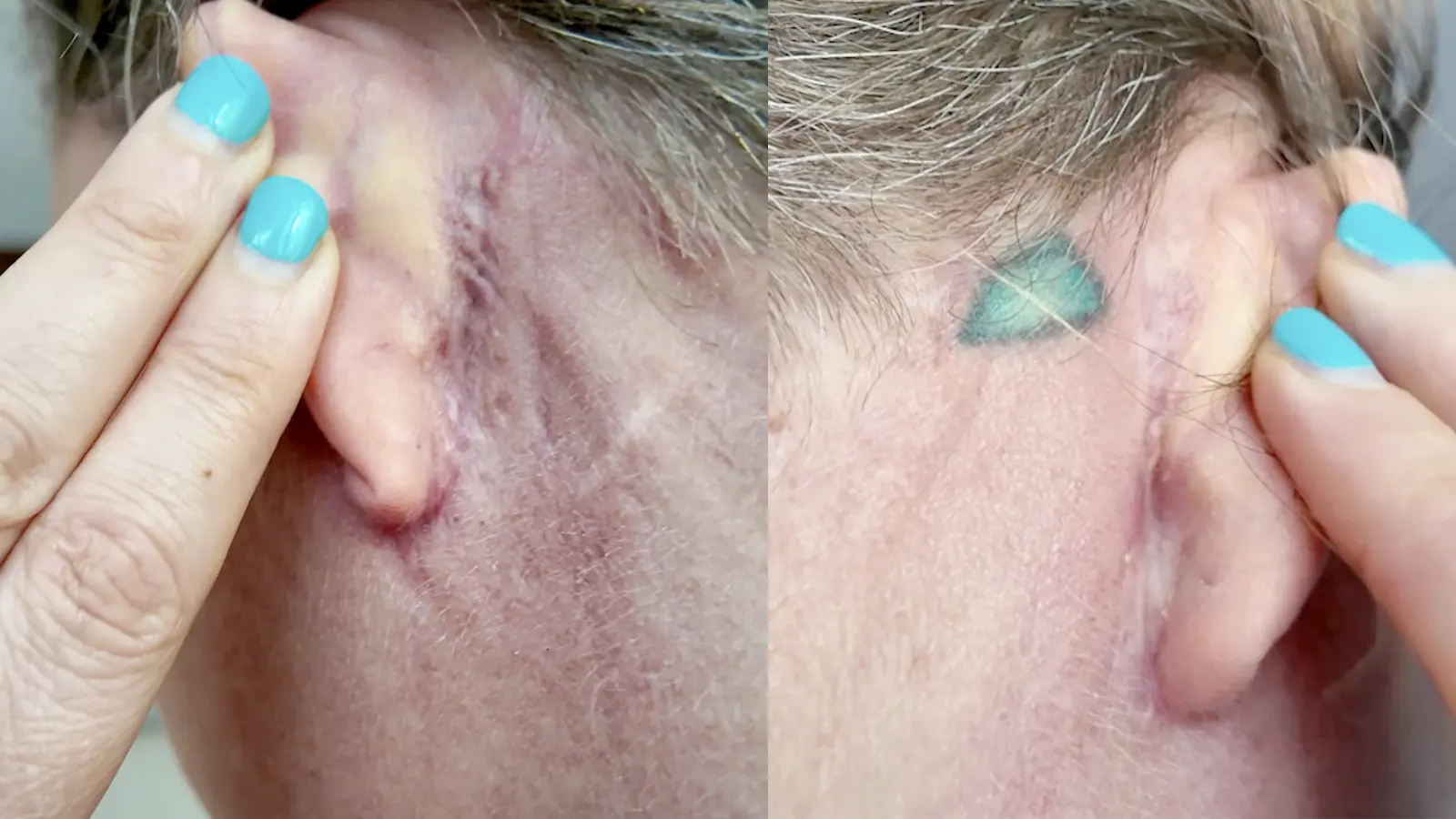
I had CO2 laser treatment on the scar under my chin, and immediately afterward it actually looked more prominent, not less. I'm continuing to watch how it changes over time rather than judging the result based on what it looks like right now. One thing this recovery has repeatedly taught me is how difficult it is to evaluate healing when you're looking at yourself every single day. Changes that are obvious when I compare photographs from a month apart can feel almost nonexistent when I'm inspecting my face every morning.
That's one of the reasons I've found documenting the recovery so useful.
My Neck Lift Recovery at Three Months
My neck feels considerably more normal now.
I still have some swelling and tenderness underneath my jawline, along with lingering numbness around my ears, but otherwise the area feels good and has the tighter appearance I was hoping for.
My recovery routine is also much less intense than it was during the first month. I'm no longer doing regular lymphatic drainage on my neck and jawline, and I've become less rigid about some of the habits I followed immediately after surgery. I'm still having a daily protein smoothie with collagen, which has become part of my regular routine, and I've gradually returned to exercise. This has been a particularly important milestone for me because before surgery I was weightlifting regularly and felt like I was in some of the best physical shape of my life. Being forced to stop was much harder emotionally than I expected. At three months, I'm back to weightlifting approximately three times per week, along with Zone 2 cardio, a weekly 5K, and some HIIT. Getting back into that routine has made me feel considerably more like myself again.
As with everything in this recovery series, that's my individual timeline, not a recommendation for when someone else should return to exercise after surgery. Your surgeon should determine what's appropriate based on your procedure and recovery.
What My Facelift Scars Look Like at Three Months
I want to talk about scars separately because this is something I see people worrying about constantly in facelift recovery groups and forums. At one month, I was genuinely unhappy with how my scars looked. At three months, I feel very differently about them. They haven't disappeared, and I don't expect them to look perfect at this stage, but they're fading enough that I'm beginning to understand what everyone meant when they told me to give them time. I'm continuing with scar care based on my doctor's recommendations, but I think the most useful thing I can share from my own experience is considerably less exciting: Patience has mattered more than anything.
I've also had to stop comparing my scars with other people's facelift results online. It's incredibly easy to find someone whose incisions appear practically invisible at three months and immediately wonder why yours don't look the same. What you don't necessarily know is their age, skin, genetics, surgical technique, scar history, lighting, makeup, photo editing, or whether the photograph you're comparing yourself with even accurately represents what they look like in person.
I've learned that comparison can become one of the least helpful parts of recovery. Now, when I catch myself doing it, I try to come back to the same reminder: this is my healing timeline, not theirs.
My Lower Blepharoplasty Results at Three Months
Of all the procedures I had done, my lower blepharoplasty is the clear winner so far.
I'm genuinely thrilled with it. The small scars have essentially faded to the point that I barely notice them, my eyes look considerably less tired, and I have volume underneath them that I didn't have before.
Rather than simply removing the tissue responsible for my under-eye bags, my surgeon repositioned existing tissue to preserve volume beneath my eyes. I'd previously tried fat transfer in that area in December 2024, but I wasn't happy with how long the result lasted for me. At three months, I much prefer what I'm seeing from the lower blepharoplasty.
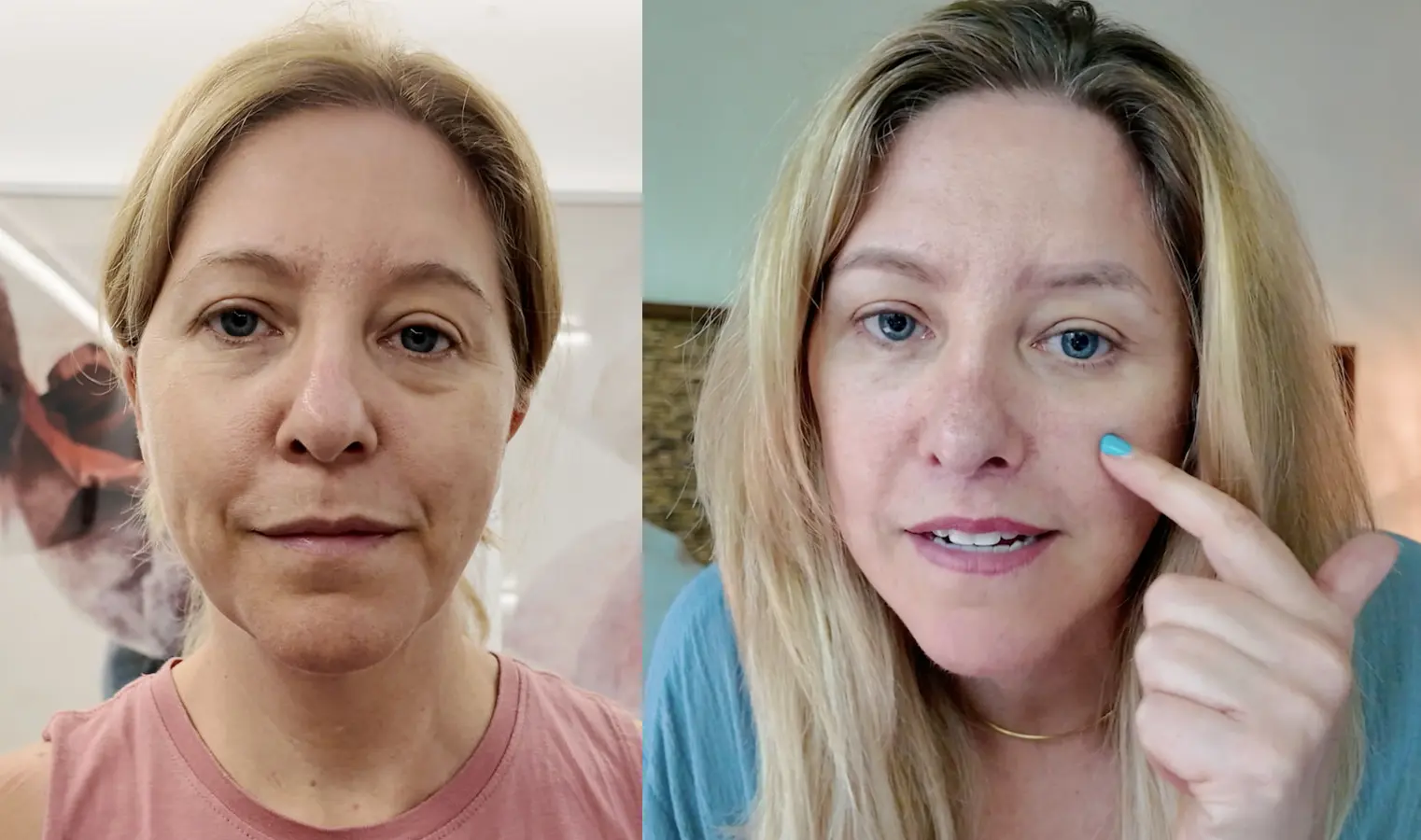
It's interesting because this is the procedure I'm thinking about the least now, which is probably the best compliment I can give it. I'm not standing in front of the mirror analyzing my under-eyes anymore.
They simply look more rested to me.
My Lip Lift Recovery at Three Months
The lip lift remains the hardest part of my recovery emotionally.
The scar underneath my nose is still visible when I talk, particularly without makeup, which I'm intentionally not wearing for these recovery updates because I want you to see what everything actually looks like. The scar is also incredibly itchy right now, more so than the scars around my ears, and I find myself rubbing my nose without realizing I'm doing it. I've discussed the itching with my doctor and am continuing to follow the care instructions I've been given.
I had CO2 laser treatment on the lip lift scar as well, and I'm continuing to use sun protection and the scar treatment recommended to me while I wait to see how much further it fades.
The tightness underneath my nose hasn't completely disappeared, although it has improved considerably since the first month. My smile is also noticeably bigger and more natural than it was earlier in recovery.
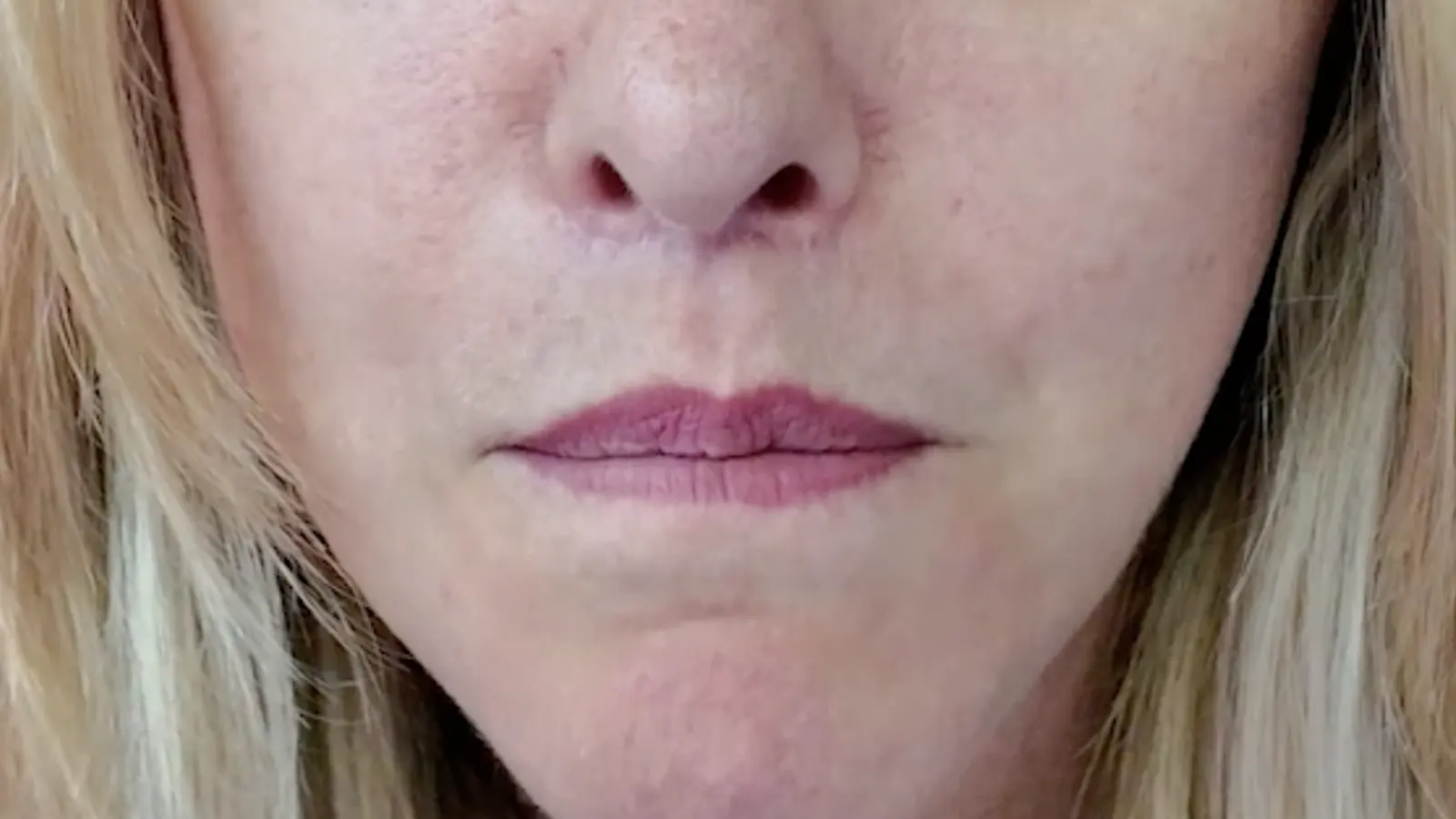
What I'm still struggling with is proportion.
My mouth looks smaller to me in relation to my nose than it did before surgery. The lip lift changed the vertical position of my upper lip, but when I look at myself now, I sometimes wonder whether I would prefer more width at the corners of my mouth as well.
That immediately sends my brain toward another potential procedure: Would a corner lip lift make this look better? This is exactly where I'm forcing myself to stop. I don't know whether another procedure would improve anything, and I've decided I'm not touching this area again until I'm at least a year post-op and can see where everything actually settles.
I've also resisted getting lip filler in the meantime, even though I've been tempted. I recently had permanent makeup done on my lips, which isn't completely healed yet, and the color creates a subtle optical effect that makes them appear slightly fuller. For now, that's enough.
Three Months Later: Do I Regret My Facelift?
This is probably the biggest difference between my one-month and three-month updates.
No, I don't regret my facelift. At one month, I couldn't confidently say that.
I was still swollen, uncomfortable, worried about my scars, unhappy with certain proportions, and emotionally struggling with seeing a face that didn't completely look like mine yet. At three months, I'm beginning to see the bigger picture.
There are results I love, particularly my lower eyes and the improvement through my neck and jawline. There are areas I'm still waiting on, including scars, numbness, tightness, and the lip lift. There are also things I've noticed about my face that may have nothing to do with surgery but suddenly seem glaringly obvious because I'm paying more attention than I ever did before.
I don't think I understood before surgery how much cosmetic surgery recovery happens inside your head as well as your body.
What Cosmetic Surgery Has Taught Me About Losing Perspective
This entire process has shown me how easy it can be to lose perspective on your own appearance.
You start examining every tiny detail. You notice an asymmetry and wonder whether it needs fixing. Then you notice another feature and imagine how that could be adjusted. You start comparing old photographs, new photographs, different angles, different lighting, and other people's results.
Before long, you're not really looking at your face anymore. You're looking for problems.
I can absolutely understand now how someone could fall into a cycle of continually chasing procedures, hoping the next small adjustment will finally produce the feeling they're looking for. I've felt some of that pull myself.
The lip lift is a perfect example. I'm not completely happy with the proportions yet, so my brain immediately starts proposing solutions: corner lift, filler, something else.
I'm trying to resist that. I wanted this surgery because I wanted to look like a rested version of myself, not because I wanted to become a different person. I don't want recovery to turn into an endless project where every change creates another thing I think needs changing.
At three months, one of the most important things I'm learning is that sometimes the next step isn't another procedure. Sometimes it's waiting.
Stop Comparing Your Facelift Recovery to Social Media
If I could give myself one piece of advice at the one-month mark, it would probably be this:
Stop looking at everyone else's results.
Social media is an especially strange place to evaluate cosmetic surgery recovery because we tend to see people's best photographs, best angles, best lighting, and final results. We don't always see the weeks or months when they were swollen, numb, asymmetrical, scarred, or questioning everything. I know this because I'm documenting those exact moments myself.
When I compare my three-month photos with my one-month photos, I can see progress that I couldn't necessarily perceive while it was happening. That's why I'm trying to judge my recovery against my previous recovery, rather than somebody else's face.
Where I Am Three Months After My Facelift
Three months after my deep plane facelift, neck lift, lip lift, and lower blepharoplasty, I feel dramatically better about my decision than I did at one month.
I'm back to exercising. I'm more comfortable being seen. My scars are fading. My face feels increasingly familiar again, and I'm beginning to appreciate the results without examining every detail quite as relentlessly. I'm not completely finished healing, and I'm not completely finished adjusting emotionally either.
The biggest difference is that I'm no longer waiting to decide whether I regret having surgery. I know that I don't. Now I'm learning how to let the result become mine.
If you're somewhere in the middle of your own cosmetic surgery recovery and wondering why you don't look like the perfectly healed person you saw online, remember that a photograph of someone else's result doesn't tell you what their recovery actually felt like. This is what mine looks like at three months: much better, still healing, occasionally uncertain, but finally starting to feel like myself again.
Frequently Asked Questions About My Three-Month Facelift Recovery
What procedures did I have?
I had a deep plane facelift, neck lift, lip lift, and lower blepharoplasty. This post documents my personal experience approximately three months after surgery.
Do I still have swelling three months after my facelift?
I still notice some swelling and tenderness underneath my jawline, although it has improved substantially compared with the first month. Recovery varies by patient and procedure, so I'm following my surgeon's guidance rather than using someone else's timeline to determine what mine should look like.
Is my face still numb three months after a facelift?
I still have areas of numbness and tingling along the sides of my face and around my ears. I'm continuing to monitor those changes with my medical team as my recovery progresses.
What do my facelift scars look like at three months?
My scars have faded considerably since the one-month mark, although some are still visible. The areas around my ears and hairline continue to change, and the scar underneath my chin remains more noticeable.
Am I happy with my lower blepharoplasty?
Yes. At three months, my lower blepharoplasty is probably the result I'm happiest with. My under-eye area looks more rested to me, the small scars have faded significantly, and I'm happy with the volume beneath my eyes.
Am I happy with my lip lift?
I'm still conflicted about it. My smile and movement have improved significantly, but I'm still adjusting to the proportions of my mouth and nose, and the scar remains visible to me. I've decided not to pursue any additional changes until I'm much further into recovery.
Do I regret my facelift?
At three months, no. That's a significant change from how uncertain I felt at one month. There are still aspects of my results I'm evaluating, but overall I don't regret having the surgery.
When will I judge my final facelift results?
My surgeon said it can take up to a year to see final results, so I'm deliberately giving myself much more time before making any final judgments or considering additional procedures. Three months has already shown me how dramatically my perception and appearance can change over a relatively short period of recovery.